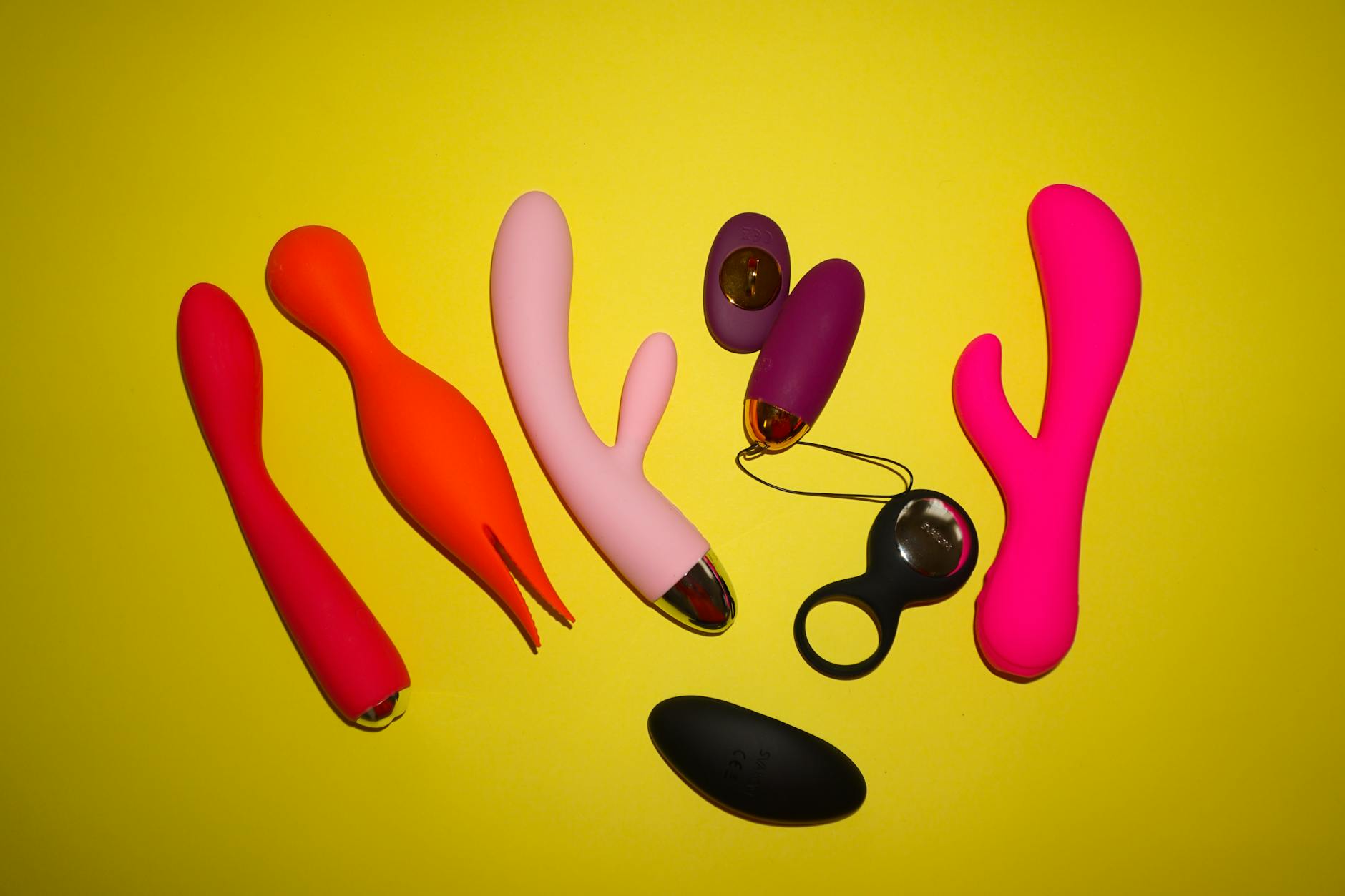
Here's the thing about vibrator settings
Most people treat their lemon vibrator like a light switch. On or off. But the magic isn't in the on. It's in understanding what each pattern actually does to your body, and why some settings unlock experiences that others completely miss.
Your nervous system doesn't experience all vibration the same way. A steady, high-intensity hum feels nothing like a rhythmic pulse. And neither feels like a slow climb. Each one can lead to genuinely different types of orgasm.
The neuroscience of vibration patterns
When you use a lemon vibrator, you're sending repeated signals to thousands of nerve endings concentrated in your clitoris. The brain processes these signals and builds arousal through a combination of frequency (how fast the vibration happens), intensity (how strong it is), and rhythm (whether it's steady, pulsing, or escalating).
Different patterns activate different neural pathways. A constant, medium-speed pulse activates steady arousal. A fast, intense pattern can trigger what researchers call a "stacking" effect, where pleasure builds on itself without plateauing. A slow, rhythmic pulse engages the parasympathetic nervous system, which is involved in relaxation and deeper, full-body responses.
Here's what matters: if you've only ever used one or two settings on your lemon clitoral vibrator, you're working with maybe 20 percent of what's actually available to you.
Setting 1: The warm-up (patterns 1-3, low to medium intensity)
Use this when you're just beginning, or when you want to extend the experience instead of rushing to the finish.
Low-intensity settings on lemon sexual toys create a gentle, consistent sensation that builds arousal slowly. This isn't boring. It's intentional. Your body is learning the rhythm, blood is flowing to the area, and your nervous system is ramping up without the immediate intensity that can sometimes plateau too fast.
What this setting unlocks: A slower-building, more full-body arousal. People often report that this path leads to more expansive sensations, sometimes even vaginal engagement without direct penetration. The extended timeline also means you can stay in this zone for 15-25 minutes, which deepens sensitivity and often results in a longer, more sustained orgasm when you finally escalate.
Tip: If you're partnered, this is also the best zone for exploration together, because you're not racing toward an endpoint. You're present.
Setting 2: The plateau (patterns 4-6, medium to medium-high intensity)
This is where most people live, and honestly, it works. Medium intensity on a lemon vibrator sits in a sweet spot: strong enough to feel genuinely pleasurable, but not so intense that you hit a ceiling quickly.
Medium-intensity patterns feel responsive. You can feel yourself building, backing off, building again. There's control here. And for a lot of people, this is the zone that produces the most straightforward, satisfying clitoral orgasm. It's direct, it works, and you're not fighting the sensation.
What this setting unlocks: A reliable, focused clitoral orgasm. Fast. Generally in the 10-15 minute range, depending on where your body is in your cycle and how aroused you were going in. For people who want consistency and aren't looking for a long experience, this is your home setting.
Note: If you've only ever used settings in this range, you might think you know your capacity. You don't yet.
Setting 3: The sprint (patterns 7-10, high intensity)
High-intensity settings on lemon adult toys are not for warming up. They're for when you already know the path and you want to arrive fast.
Intense vibration floods your nervous system with signals. The clitoris can only process so much input before it reaches a kind of sensory peak. This isn't numbness (that's a separate thing and way less common than myths suggest). It's more like your body saying, "I have enough information to make a decision." And that decision is usually orgasm, quickly.
High intensity also tends to produce more localized orgasms. You feel it concentrated in your clitoris and the immediate area, rather than radiating through the whole body. For some people, that's exactly what they want. For others, it feels a bit limiting.
What this setting unlocks: A fast, intense clitoral orgasm. The kind you can achieve in 5-10 minutes when your body is already somewhat aroused. Also useful if you're using the lemon vibrator to ease tension or reset your nervous system quickly.
Warning: Using only high-intensity settings regularly can lead to temporary desensitization in that session, but not over time. If you notice you need longer warm-up sessions after a pattern of high-intensity use, dial it back for a week.
The game-changer: Escalating patterns
If your lemon clitoral vibrator has an escalating or pulsing pattern (and most do), this is where the real exploration happens.
Escalating patterns start low and build gradually, sometimes peaking and dropping again. They mimic the natural rhythm of arousal itself. Your body doesn't experience pleasure as a flat line. It builds, plateaus, might dip slightly, then builds again. When your vibrator does that for you, something shifts.
What this setting unlocks: Blended orgasms (where you feel both clitoral and internal sensation even without penetration), extended orgasms (where the climax lasts longer and isn't a single peak), and sometimes multiple orgasms in sequence. Escalating patterns also tend to produce more full-body sensation, because you're not overwhelming your nervous system immediately.
Try this: Start an escalating pattern at the lowest level. Let it build for at least 10 minutes without adding intensity manually. Most people report that this approach feels less like chasing an orgasm and more like allowing one to happen.
Combining settings for deeper sensation
Here's something most people don't experiment with: switching patterns mid-session.
Your nervous system adapts to continuous input. If you've been on pattern 5 for 10 minutes and you're feeling arousal but not quite there, switching to pattern 8 suddenly can break the adaptation and send you over the edge. Or, if you've been using high intensity and you're plateauing, backing off to a medium pattern for a minute and then switching back creates a rhythm that feels fresh.
The lemon vibrator works best when you treat it like a conversation with your body, not a preset. Your nervous system is constantly giving feedback. High arousal, low arousal, numb, overwhelmed, engaged, distant. The ability to respond in real time by changing settings is what separates a good session from an extraordinary one.
What nobody talks about: position matters as much as setting
Here's the overlooked part. The same setting on your lemon sexual toy feels completely different depending on your position and what you're mentally focused on.
Direct, straight-on pressure tends to create faster, more localized orgasms. Angled pressure, from the side or with the vibrator positioned over the entire vulva rather than isolated to the clitoris, tends to engage broader sensation. Some people get more intense orgasms with their knees together. Others need them apart. This isn't about the setting anymore. It's about the full context.
If you've been using the same setting in the same position every time, you haven't actually found your favorite setting yet. You've found your default.
When to dial back intensity
If you're noticing that only the highest settings feel like anything, that's not actually about your sensitivity. That's usually about habituation. Your nervous system has learned to filter out the lower-intensity input because it's become the norm.
The fix: Take a week off from your lemon vibrator. Or spend a week using only patterns 1-3. Your sensitivity will return. And when it does, you'll notice that the middle settings suddenly feel like a lot more again.
FAQ: Getting the most from your lemon vibrator settings
How long should I spend exploring different settings before I find my favorite?
At least two weeks of regular use. Your body needs time to recalibrate after each session, and different patterns might reveal themselves at different points in your cycle. Track which settings work best on different days. You might find you prefer low-intensity settings when you're less aroused going in, and high-intensity settings when you're already somewhat engaged.
Can I damage my clitoris by using high-intensity settings too often?
No. Your clitoris is resilient. What you might experience is temporary desensitization during that session if you spend more than 20-30 minutes on the highest settings, but that reverses within hours. Long-term damage from vibrator use is basically nonexistent in people with healthy vulval tissue.
Is it normal to need different settings at different times?
Completely normal. Arousal, stress, hormones, partner dynamics, mental focus, where you are in your cycle, whether you've had an orgasm recently. all of it affects what your body needs. Someone with a flexible approach to settings gets more reliable pleasure than someone who insists on using the same pattern every time.
Why does the same setting feel different on different days?
Your nervous system is responsive to context. Stress, sleep, hydration, exercise, relationship satisfaction, how much you're present mentally. all of it changes the signal-to-noise ratio in your nervous system. A setting that feels perfect when you're relaxed and present might feel like nothing when you're distracted or stressed. This is information, not failure.
Should I always build from low intensity to high, or can I start where I want?
You can start wherever serves the session. If you have 10 minutes and you want a quick release, high intensity makes sense. If you have 45 minutes and you want to explore, starting low and escalating is better. Your goal determines your approach, not some rule about the "right" way.
What if no setting feels right?
Then you're probably in one of three situations: you need to change your approach to foreplay or arousal (spend more time with hands or a partner before the vibrator), something in your life is dampening desire (stress, relationship tension, medication), or your body genuinely needs a different kind of stimulation entirely. That might mean a different toy, a different position, or partnered play. The lemon vibrator is versatile, but it's not the only tool.
The real secret
The best setting isn't the one that's objectively strongest. It's the one that matches your nervous system in that moment, with that context, on that day. Learning to listen to what your body is asking for, and being willing to adjust, is what transforms a vibrator from a appliance into an actual partner in your pleasure.
Your capacity for different types of orgasms is bigger than you think. And the settings are just the bridge between where you are now and where you want to go. Explore them.