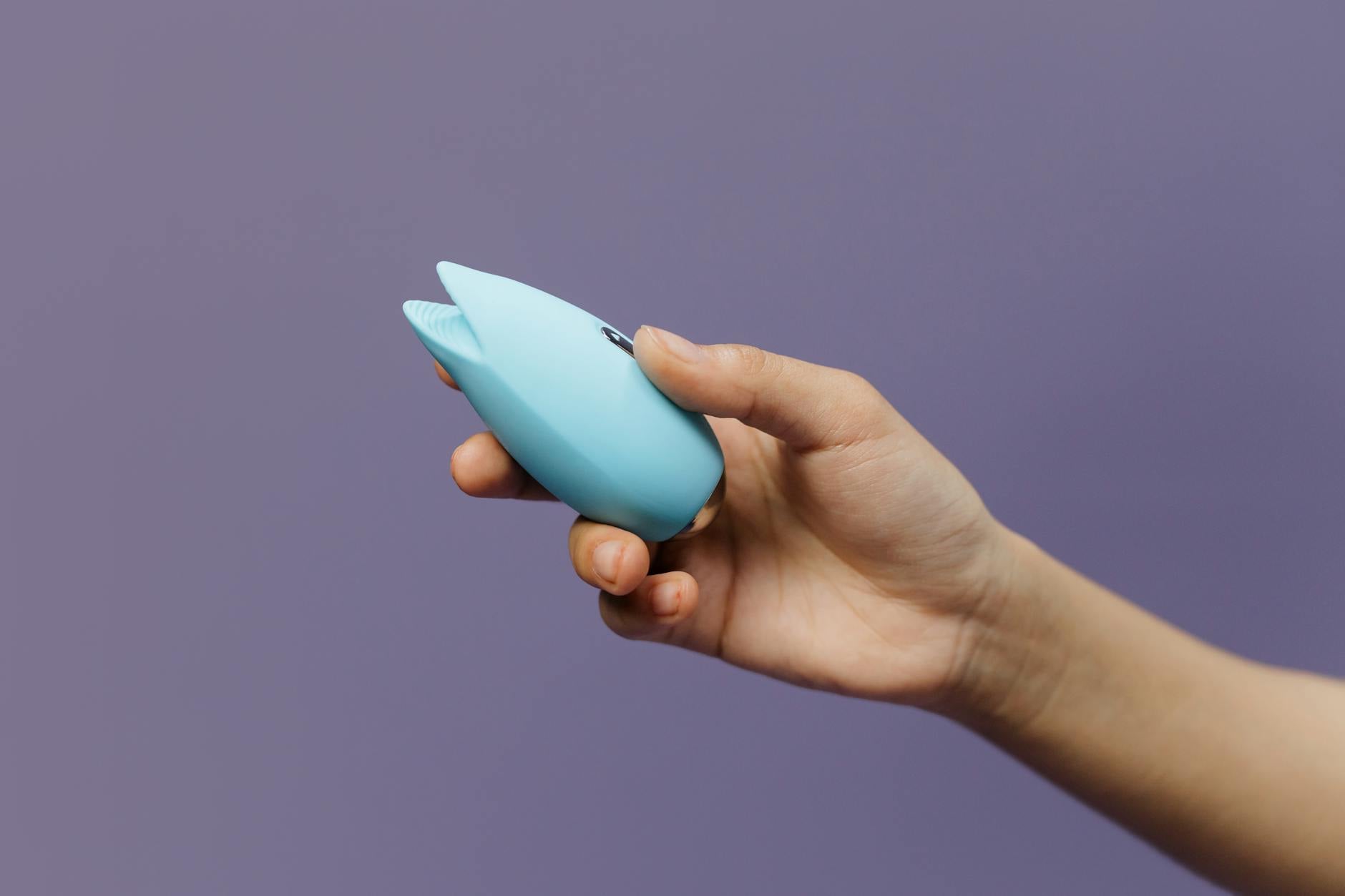
How Lemon Vibrators Improve Clitoral Sensitivity Over Time
Honestly though. Most of what you've been told about clitoral sensitivity is backwards.
You're not losing sensation. You're not broken. What's actually happening is that your body adapts to the type of stimulation it receives regularly. If that stimulation is shallow friction on a single spot, your clitoris learns to expect that. If it's the gentle, building pressure of suction, your nervous system rewires itself for something deeper. Your sensitivity doesn't decline. It evolves.
And lemon vibrators, specifically, are built to trigger that evolution in a way that other toys often miss.
Why your clitoris changes with use
Your clitoris has about 8,000 nerve endings packed into a structure the size of a pea. That's roughly four times more nerve density than your entire fingertip. These nerves don't just respond passively to whatever touches them. They adapt. This process, called neural plasticity, is how your body learns and adjusts to repeated stimuli.
When you use the same toy the same way every time, your nervous system habituates. Sensation flattens. You find yourself reaching for higher settings or longer sessions just to feel the same effect. This isn't a sign of damage. It's a sign that your body is becoming more efficient at processing that specific input.
The fix isn't to use your toy less. It's to vary what you're sending to your nervous system. And that's where lemon vibrators change the game.
What makes lemon vibrators different
Most clitoral toys use vibration. That means rapid back-and-forth movement at a single frequency. Your clitoris feels it, your brain registers it, and if you use the same pattern daily, your nerves stop finding it novel.
Lemon vibrators use suction instead. Rather than friction moving across the surface, suction creates a seal and pulls gently. This stimulates nerve endings along the entire clitoral body (yes, most of it is internal) in a way that diffuses pressure rather than concentrating it in one spot.
That difference matters neurologically. Suction engages a different set of nerve pathways than vibration alone. When you switch from a standard vibrator to a lemon sucker, you're not just changing toys. You're giving your clitoral nerves a completely new language to learn.
How repeated suction rewires pleasure response
Here's what happens in your nervous system when you start using a lemon vibrator consistently.
Week one: novelty. Your clitoris has never felt this sensation before. Every session feels fresh. Your nervous system is firing on new pathways, which means your brain is paying close attention. This is why the first few times often feel more intense than you'd expect.
Weeks two to four: integration. Your body isn't treating the sensation as alien anymore. It's learning the pattern. You're developing faster arousal because your brain now recognizes "suction = pleasure" and mobilizes blood flow and wetness more quickly.
Weeks five to twelve: deepening. This is where the real shift happens. Your nervous system has mapped the sensation. Now it's optimizing response. What started as surface sensitivity becomes more rooted. Many people report that their orgasms deepen around this point, or that they can reach them faster.
Months three plus: refinement. You're not chasing higher sensations anymore. You're accessing richer ones. Because you've built neural pathways for suction-based pleasure, you also tend to notice subtler variations in other types of stimulation. Your overall clitoral sensitivity improves, not because your nerves are more responsive to everything, but because your brain has learned to read pleasure in more sophisticated ways.
The science of sensory learning
This isn't mystical. Neuroscientists call this "sensory gating" when it dampens, and "sensory facilitation" when it deepens. Your brain is constantly filtering input. If a sensation is familiar and low-threat, it gets quieter in your awareness. If it's novel or requires attention, it gets louder.
Using a lemon vibrator regularly keeps introducing novelty. Even within the same toy, slight variations in position, pressure, and pattern feel different to your nervous system because suction distributes sensation across a wider area than a vibrator's narrow point. This ongoing variety keeps your nervous system engaged.
There's also a mechanical component. When suction pulls on clitoral tissue, it increases blood flow to the area. Over weeks and months, this promotes tissue health and sensitivity. You're not just training your brain. You're literally improving circulation and tissue responsiveness.
Building a rhythm that works
Don't use a lemon vibrator every single day at maximum intensity for 20 minutes and expect your sensitivity to keep improving. That's the opposite of what you want.
Instead, think of it like exercise. Consistency matters more than intensity. Use your lemon vibrator three to five times weekly. Start at lower suction settings and learn what your body responds to. Vary the pattern. Some sessions, use it for 10 minutes. Other times, 20. Some days, pair it with internal stimulation. Other days, clitoral only.
This variation is what keeps your nervous system engaged. This is what creates the ongoing neural adaptation that deepens sensitivity rather than dulling it.
For many people, this means their sensitivity actually peaks around the six-month mark, not the first week. The depth of sensation, the speed of arousal, the intensity of orgasm—all of these tend to improve over time if you're using your toy thoughtfully.
What happens if you take a break
Here's the reassuring part. If you step away from your lemon vibrator for a week or two, your sensitivity doesn't reset to zero. Neural pathways don't erase. But they do fade slightly. This is why many people say a break actually makes the toy feel new again when they return to it. You get novelty and history at the same time.
This is actually useful to know. If you feel like sensations are flattening, a week or two away isn't failure. It's often the fastest way to reset your baseline and come back to deeper sensation.
Pairing lemon vibrators with other tools
One of the unexpected benefits of building clitoral sensitivity through suction is that your body becomes more responsive to other types of stimulation too. Once your nervous system has learned the suction language, it becomes better at recognizing and amplifying other signals.
Some people find that after a few months of regular lemon vibrator use, they're more responsive to a partner's touch. Others notice that they enjoy combination toys—like pairing their lemon vibrator with internal stimulation—more than they did before. You're not replacing other toys. You're actually making your whole sexual nervous system more literate.
If you're using a lemon vibrator with a partner, the stakes feel different because now you're both learning together. Your partner learns where and how you like the suction. You learn how to communicate what's working. That communication itself—the practice of naming what feels good—is a form of sensitivity building.
The long game
Most conversations about clitoral sensitivity focus on immediate sensation. Bigger, stronger, faster. But real sensitivity isn't about intensity. It's about nuance. It's about your nervous system becoming sophisticated enough to feel subtle changes. It's about your brain learning to recognize pleasure in more ways.
Lemon vibrators train that. Not because they're magic, but because suction-based stimulation engages your clitoris in a way that matches how it's actually built. You're not fighting your anatomy. You're speaking its language.
If you've been using the same toy the same way for years and sensation feels flat, a lemon vibrator isn't a band-aid. It's an opportunity to teach your nervous system something new. And honestly, that's where the deepest pleasure lives—not in the first rush of novelty, but in what comes after. When your body has learned to want something, to build toward it, to meet it with intelligence.
FAQ: Your most asked questions
Can you build clitoral sensitivity if you've used vibrators for years?
Absolutely. The key is changing the type of stimulation, not the frequency. If you've been using traditional vibrators for a long time, switching to a lemon vibrator (or any suction-based toy) introduces novelty to your nervous system. Your clitoris hasn't forgotten how to respond to new sensations. It's just been trained by what you've been giving it. Different input produces different output.
How long before you notice a difference with a lemon vibrator?
Most people notice something by week two or three. The sensation feels fresher, or arousal builds faster. Real sensitivity deepening usually shows up around six to eight weeks. This doesn't mean you're doing something wrong if you don't feel a dramatic shift in week one. Your nervous system is learning. That process is quiet at first.
Will your sensitivity go back down if you stop using lemon vibrators?
It will fade gradually, the same way any skill fades without practice. You won't lose all sensitivity overnight. But neural pathways do weaken without reinforcement. This is actually useful information. If sensation feels flat, you don't have to escalate intensity. Sometimes a two-week break and return is more effective than chasing higher settings.
Is it normal to need a longer warm-up when starting with lemon vibrators?
Yes. Suction works differently than vibration. Your body needs time to learn how to respond to it. If you're used to vibrators, you might be expecting immediate intensity. Lemon vibrators often require a longer, slower build. That's not a problem. That's the point. You're training for depth, not for speed.
Can you use lemon vibrators if you have a highly sensitive clitoris?
Lemon vibrators are often better for sensitive clits than traditional vibrators. Suction distributes pressure across a wider area rather than concentrating it in one point. The sensation is intense but diffuse. Many people with sensitive clitorises find that lemon suckers feel gentler and more controllable than vibrators, especially at lower settings. Start low, adjust up slowly, and you'll find your range.
Does partnered use change how sensitivity develops?
It can. When a partner is involved, communication becomes part of the learning process. Your partner learns where and how you like the stimulation. You're naming what feels good in real time. That verbal and relational engagement actually deepens neural pathways. It's not just your nervous system adapting to the toy. It's your nervous system adapting to a shared experience, which adds another layer of meaning.
Your clitoral sensitivity isn't fixed. It's responsive to what you teach it. That's not a weakness. That's your superpower. Every time you explore a new sensation, you're expanding what your nervous system knows how to feel. Lemon vibrators are one language your clitoris can learn. And if you're willing to be patient while it learns, the depth that comes next is worth the wait.
If you're curious about how to integrate a lemon vibrator into your routine, or how to use one with a partner, Hello Nancy has resources that walk through both. Your pleasure is worth the thoughtfulness.