How to Use Lemon Vibrators Alone vs. With a Partner
Let's be real: using a lemon clitoral vibrator solo feels completely different from using one with a partner. Same device, totally different experience. The mental state is different, the pacing is different, and what feels good often shifts based on who's in the room.
Understanding both matters because solo play and partnered play aren't interchangeable skills. Mastering one doesn't automatically translate to the other. But knowing how they differ, and what works best in each scenario, can transform both.
Solo play: building your own baseline
When you're alone with a lemon vibrator, you're in complete control. No performance anxiety, no checking whether your partner is enjoying themselves, no external stimulation competing for your attention. This is where you get to learn what actually feels good without any filter.
Start slow. Set aside time where you're genuinely aroused before touching the device. This isn't about rushing through foreplay. Spend 10 to 15 minutes reading something sexy, watching content that turns you on, or just letting your imagination work. Your body will tell you when it's ready. When you pick up the lemon vibrator, start at a lower intensity. Most people instinctively reach for maximum power, but that's like turning up the volume on a song before you've even heard the intro. Exploration works better when you pace yourself.
Find the angle that works for your anatomy. Some people prefer direct pressure on the clitoris. Others need the vibration slightly off to one side. Some want the toy held at an angle rather than straight on. Solo play is your lab. You're gathering data on what your body responds to when nobody's watching.
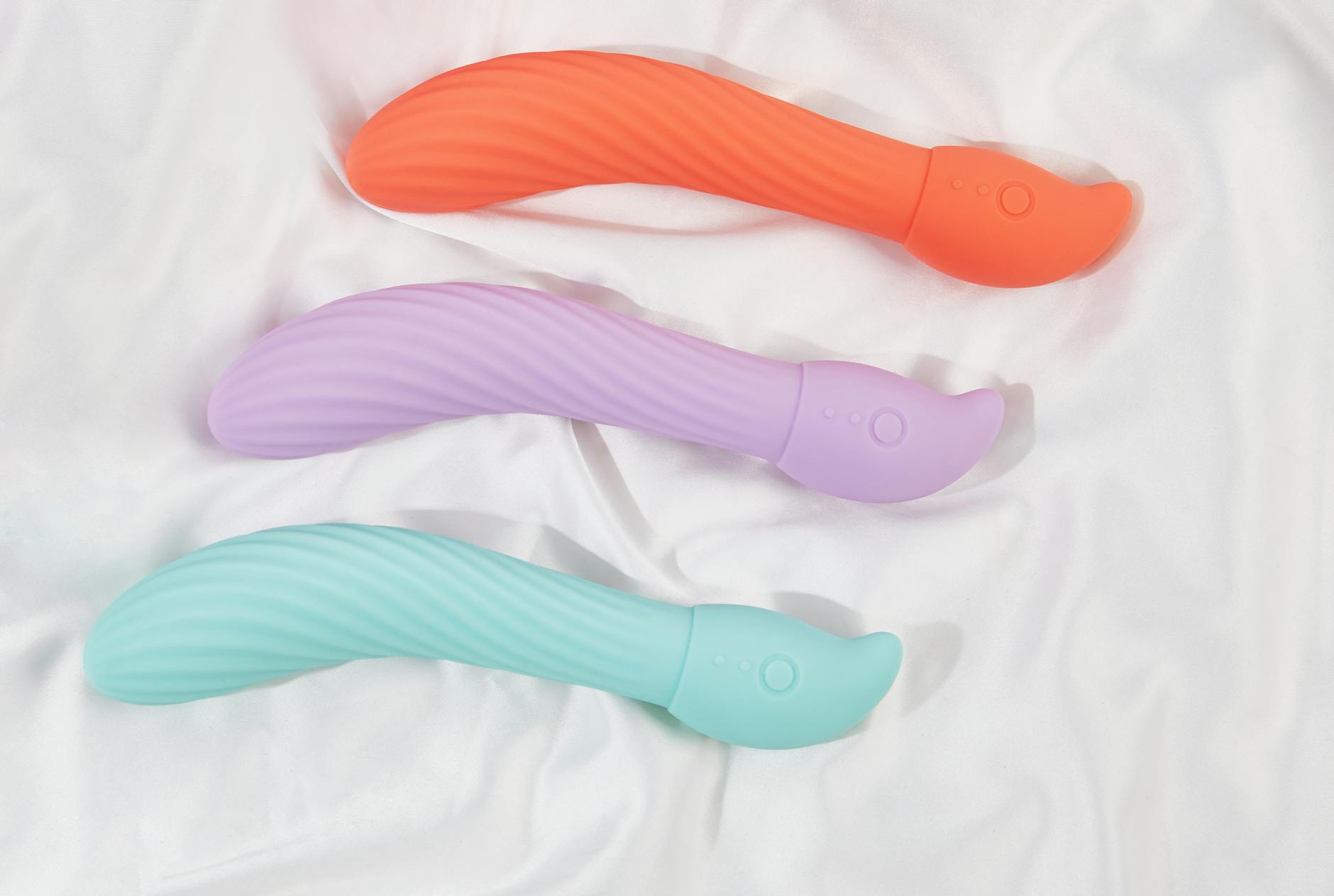
Photo by IFONNX Toys on Pexels
Pay attention to rhythm. Does your body like consistency, or does it respond better to patterns and variation? A lemon vibrator's suction pattern is different from traditional vibration, so you might notice your arousal building differently than with other toys. Some people find that one steady pattern works best. Others discover that alternating between settings, or changing intensity in waves, builds deeper orgasms.
One unexpected benefit of solo exploration: building tolerance for longer sessions. When you're alone, there's no pressure to finish quickly. You can spend 30 minutes or an hour exploring, which trains your body to sustain arousal longer. That skill carries directly into partnered play, even though the context changes.
Partnered play: the coordination conversation
Using a lemon vibrator with a partner introduces variables you can't control alone. Their touch, their pacing, what they want to do, what you want them to do. This is where communication stops being optional and becomes essential.
Here's what changes physically. When a partner is involved, you're no longer the only person directing stimulation. Someone else is holding the toy, or touching you, or watching your response and adjusting based on what they see. That requires a totally different mental presence. You're partly focused inward on sensation and partly aware of another person. For some people, that shared attention is the whole appeal. For others, it's a distraction at first.
Start the conversation before you're in the moment. Not hours before. But when you're both clothed and calm, say something like: "I want to explore using toys together. Here's what I've learned works for me solo." Show them. Let them feel the intensity on their wrist or hand so they understand what each setting feels like. Talk about what you'd like them to do. Some people want their partner to hold the lemon vibrator the whole time. Others want penetration or manual stimulation happening simultaneously. Some want their partner focused entirely on watching and adjusting based on feedback.
The angle conversation matters more with a partner than solo because your partner might be approaching from a different angle than you would. What feels perfect when you're controlling it might feel slightly off when they're directing it. Use real-time feedback. "A little higher," "Slower pattern," "Keep that rhythm." Your partner isn't a mind reader. Verbal communication during play, even if it feels clinical, is actually what keeps you connected and ensures the experience is good for both of you.
Intensity differences: alone vs. together
Most people need less overall intensity with a partner than they do alone. Solo play allows you to build arousal through extended exploration. Partnered play has different intensity sources: the pleasure of being desired, the intimacy of being watched, the physical sensation of being touched elsewhere simultaneously.
Start lower than you think you need. If you usually finish solo on intensity setting 5, try starting a partnered session on setting 2 or 3. The added mental and physical input from your partner often means you need less device power to build toward orgasm. You can always increase. You can't easily dial back if you've already overwhelmed your system.
One common mistake couples make: the partner assumes that more power equals better. It doesn't. When you're about to orgasm with a partner, sometimes the best move is actually to hold steady instead of increasing intensity. Ask your partner to maintain the exact angle and pattern when you feel yourself getting close, rather than trying to intensify further. That consistency often pushes you over the edge better than escalation does.
Building arousal as a couple
When you're using a lemon clitoral vibrator together, the device shouldn't be your only source of stimulation. This is where many couples get stuck. They treat the vibrator as a magic button instead of one tool in a larger experience.
Incorporate other touch. While one partner uses the vibrator, the other can be kissing your neck, touching your breasts, inside your thighs, or providing penetration if that's part of your dynamic. The combination of sensations is where partnered play really shines. Your nervous system is receiving input from multiple sources. That layered stimulus often creates more intense or satisfying orgasms than the vibrator alone.
Pacing also shifts. Solo, you can speed up or slow down instantly based on your internal state. With a partner, there's a conversation happening through your body and their hands. If they're moving slowly and you need faster vibration, the contrast creates a different kind of tension. Sometimes that's wonderful. Sometimes it's frustrating. Talk about it afterward. "When you were going slow there, I wanted to match that rhythm with the vibrator too," or "I liked when you sped up your touch as the intensity increased."
Take turns. Some couples explore where one partner focuses entirely on the other. Then you switch. This removes the simultaneous pleasure dynamic temporarily, which can actually deepen connection because there's a clear receiver and giver in each moment. Some partners find that role play around this (dominance and submission dynamics, caretaking, service) adds another layer. That's a longer conversation than this article covers, but it's worth knowing it's an option if you're curious.
Communication after: the feedback loop
This is the part most couples skip. Right after, you're tired, you might want to rest or cuddle, and it feels awkward to suddenly become clinical. But a 30-second feedback loop transforms your next session.
"That felt incredible when you held it steady at the end." "I wasn't sure if the angle was right for you." "Could we try with more hand stimulation next time?" These aren't criticisms. They're data points for the next time.
Check in about intensity. "Was that vibration level okay, or should we go lower next time?" Many people find they're sensitive right after, and patterns that felt perfect in the moment were actually too intense. Others want more. The only way to know is to ask.
One important point: if something hurt or felt genuinely uncomfortable, say so then and there. Not days later. And if your partner did something that felt amazing, tell them immediately. Positive feedback is just as important as adjustments. Your partner wants to know what worked.
When one partner is hesitant
Sometimes one partner is excited about using a lemon vibrator together and the other is nervous. This is normal. Use solo play as a bridge. Let the hesitant partner explore alone first without any pressure to do anything specific. Many people relax faster when they're not being observed. Once they're comfortable with the device itself, introducing a partner becomes less intimidating.
Alternatively, start with observation. Your partner watches you use the vibrator solo while they're present but not touching. That low-pressure introduction to the device in a partnered context often makes the next step (them touching you while you use it, or them directing the device) feel less vulnerable.
Remember that comfort with sex toys isn't universal, and there's no timeline. Some people jump in. Others need time. Both are fine.
The mindset shift
Here's what I've observed clinically: people who excel at solo play with a lemon vibrator often struggle initially with partnered play because they're used to perfect control. Let go of that need to choreograph the experience. Partnered play is messier, less predictable, and actually more intimate because of it.
Solo play is about self-knowledge. Partnered play is about connection. You're not trying to replicate your solo experience with an audience. You're creating a different experience entirely, one that includes another person's presence, touch, and desire.
Frequently Asked Questions
How do I tell my partner what I've learned from solo play without making it weird?
Frame it as enthusiasm, not instruction. "I found something that feels really good, and I want to share it with you" is different from "You need to do this thing." You're inviting collaboration, not giving a lecture. Most partners actually appreciate specifics because it removes guesswork.
Can we use a lemon vibrator during penetration?
Absolutely. External stimulation during penetration is very common and many people find it intensifies orgasm. Just make sure you're using a water-based lubricant and that the vibrator doesn't slip during movement. Some couples position the toy so it's not touching the penetrating partner's genitals, which reduces overstimulation for them.
What if the vibrator is too intense for my partner to hold steady?
Let them rest their hand on your thigh and hold the toy gently. They don't need to press it firmly. The vibration does the work. Many partners make the mistake of thinking harder pressure equals better sensation, but it's usually the opposite. Tell them: "Let the vibrator do the work. Your hand can be light."
How do I know if my partner is actually into using a lemon vibrator or just doing it for me?
Ask them directly. "Are you enjoying this, or are you doing this because you think I want it?" If they're not into it, pushing won't help. Explore what specifically makes them hesitant. Is it the vibrator itself? The sensation? Feeling like they're not needed? Those are different conversations with different solutions.
Should solo and partnered sessions feel the same?
No. They shouldn't. Your solo sessions are typically longer, more exploratory, and more about learning your own body. Partnered sessions are shorter on average, more focused on connection, and involve different types of touch and presence. That variation is actually healthy. You're not supposed to replicate solo play with a partner present. You're supposed to create something new together.
Is it normal to prefer solo play over partnered play, or vice versa?
Completely normal. Some people find partnered play is the only way they can relax enough to enjoy a lemon vibrator. Others prefer solo exploration and feel self-conscious with a partner. Neither is wrong. You get to honor your actual preference, not some imagined "right" way to enjoy your body.
Solo exploration with a lemon clitoral vibrator builds confidence and self-knowledge. Partnered play deepens intimacy and introduces shared pleasure. Both matter. The fact that they feel different isn't a flaw. It's the whole point. For more on setting up those important conversations, our guide on talking to partners about toys walks through specific language that works.
Your pleasure deserves attention in both contexts. Start with solo play if that feels safer. Build up to partnered exploration when you're ready. There's no rush, and there's no "right" timeline. You're learning what feels good in your body, and that's the foundation for everything else.