
Let's name the thing that kills couples sex
You want clitoral suction. Your partner wants penetration, or they want you to feel sensations they're creating, or they want to be more hands-on. And suddenly what should feel good becomes a negotiation, a compromise, or worse—something one of you isn't actually enjoying.
This mismatch is wildly common. It's not a sign the relationship is broken. It's a sign you've never had good tools to solve it.
Why the mismatch happens (and why it matters)
Honestly, pleasure preferences aren't always compatible on the surface. Someone might love clitoral stimulation during partnered sex because it's reliable and direct. Their partner might feel sidelined when a toy enters the equation, or they might want to contribute in a different way. Both of those feelings are legitimate.
The trap couples fall into is treating this as either/or. Either you use the toy and your partner feels disconnected, or you skip it and you don't get what you need. There's actually a third path: using a lemon vibrator in a way that brings you both into the experience instead of pushing one person to the margins.
Lemon clitoral vibrators, specifically suction-based toys like the Lem, are unusually good for this because they don't require much hand movement—which means your hands are free. That changes everything about how you can be present with a partner.
The setup conversation (do this first)
Before you bring a toy into partnered sex, have the conversation when you're not trying to have sex. Sit down when you're both clear-headed and say something like: "I want us both to feel good. I know what works for my body, and I'd love to figure out what works for both of us together."
Then ask: What do you actually want to be doing when I'm getting off? Because the answer might surprise you. Some partners worry the toy means they're not enough. Others just want to know their hands aren't useless. Some want to control the pace. Others want to be penetrating you, watching your face, or pressed against you in a specific way.
Once you know what your partner wants to be doing, you can work backward to find a toy and positioning that makes it possible.
How positioning changes everything
The thing about lemon vibrators is that they work well in multiple positions precisely because suction doesn't require the same kind of pressure that traditional vibration does. That means you're not locked into one angle.
If your partner wants to be inside you while you're using a clitoral vibrator, certain positions make that easier than others. Positions where you're facing each other—spooning, modified missionary where they're not directly over you—give you access to your clitoris with a lemon vibrator without creating weird geometry.
If your partner wants to watch, or wants to be using their hands elsewhere on your body, you have freedom of movement that matters. The Lem is small enough that you can position it, stimulate yourself, and still have attention and contact space for them.
If your partner wants to penetrate while you use a toy, side-by-side positions or you on top often work best because you control the depth and angle of both sensations.
The role your partner can actually play
Here's the part that transforms this from "I'm using a toy while you watch" into "we're both in this": your partner can control your experience without controlling the toy.
They can hold you, set the pace of penetration or thrusting, kiss your neck, play with your breasts, or talk you through it. These aren't consolation prizes. These are the things that often matter more than the toy itself for feeling connected during sex.
You could also take turns with the lemon vibrator. Maybe you use it on them for a while, then they use it on you. That shared experience of the same sensation, the same intensity—it often feels more intimate than either person going solo.
Or your partner could stimulate you manually while you use the lemon vibrator, so you're receiving sensation from two sources at once. That's not compromise. That's abundance.
When your partner wants to penetrate and you want clitoral stimulation
This is the most common friction point. You need clitoral contact to orgasm. Your partner might feel like the toy is a barrier to connection, or they might worry they're not doing enough.
The reality: you can absolutely have both at the same time. Positions matter here. If you're on top, you have total control of the angle and can use a lemon vibrator against your clitoris while they're inside you. If you're on your back, they can be inside you while you use the vibrator. If you're spooning, similar setup.
The language shift that helps: frame this as "you're helping me feel everything I can feel." Because that's true. Their presence, their movement, their weight, their hands—those aren't competing with the toy. They're part of the same experience.
Some partners also love holding the lemon vibrator for you during sex. This inverts the usual dynamic. You're not managing the toy while they manage everything else. They're managing part of your pleasure actively. That can flip the entire feel from "partner accommodation" to "partner contribution."
When your partner wants more closeness and less separation
Some people feel disconnected when toys enter partnered sex because it genuinely does create physical or emotional distance. That's worth listening to.
The fix isn't necessarily to abandon the toy. It's to find ways to use it that maximize contact. During foreplay, you could use a lemon vibrator on each other. The suction sensation is novel enough that experiencing it together—even just learning what it feels like—can actually deepen connection rather than create distance.
You could also use it more intermittently. Maybe the toy comes in toward the end, when you're already deeply engaged and he's inside you or close to you, so it's one addition to an already-intimate experience rather than the anchor of the encounter.
Or the toy could be used outside of partnered sex entirely. You take care of that on your own time, and when you're together, you focus on what feels connective to both of you without it. That's a legitimate choice too.
The conversation after
Once you've tried something new together, have a real debrief. Not a performance review. Just "how did that feel for you?" and actually listen.
Your partner might surprise you and say they loved it more than they expected. They might also say they felt weird about it, and that's data worth having. The goal isn't to force anything. The goal is to keep talking and keep experimenting until you land on something that genuinely works for both of you.
If you're dealing with anxiety that makes it hard to relax during partnered sex, introducing toys sometimes helps because it takes performance pressure off both people. The toy becomes a shared focus instead of either person feeling solely responsible for the other's pleasure.
Similarly, if you and your partner are reconnecting after a long break from dating, toys can be a bridge. They give you something new to explore together, which can feel less loaded than diving straight into familiar patterns.
The biggest shift: stop thinking of toys as replacement
Here's what changes everything: toys aren't replacing your partner. They're expanding what you can feel together.
Your partner's touch, presence, and attention matter. The clitoral stimulation from a lemon vibrator also matters. These aren't mutually exclusive. The best partnered sex often includes both—layers of sensation, attention, and connection all at once.
When couples stop fighting about whether to use toys and start asking "how do we both get what we need?" everything shifts. Suddenly it's not compromise. It's collaboration.
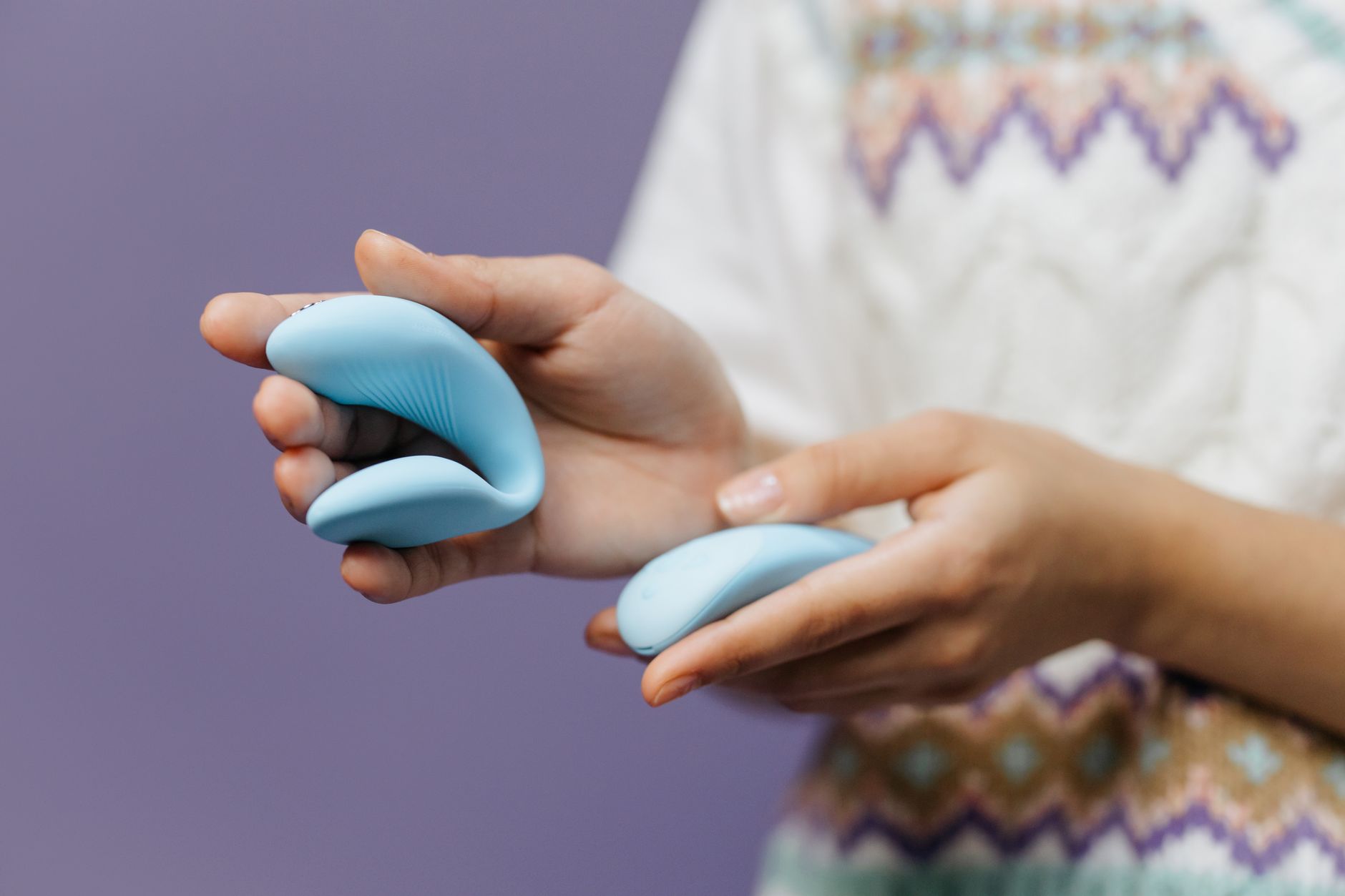
Photo by cottonbro studio on Pexels
FAQ
What if my partner feels threatened by lemon vibrators or clitoral toys in general?
That feeling usually comes from one of three places: worry that you're not satisfied with them, concern that the toy will replace them, or discomfort with the idea of pleasure technology in general. Start by naming what you actually need: "I want to feel this sensation with you, not instead of you." Then show them. Let them see how the toy works, let them use it on you if they're open to it, and prove through experience that it's additive, not subtractive. Some partners just need to understand what the toy does before they can relax about it.
Can we use lemon vibrators if my partner has a smaller erection or wants less penetration?
Completely. In fact, lemon clitoral vibrators are ideal in this scenario because they shift focus to clitoral stimulation, which many people find more reliably pleasurable than penetration alone. Your partner can still be present, intimate, and involved without penetration being the main event. This is actually an opportunity to expand what you both consider "good sex."
Is using a toy during partnered sex normal, or are we weird?
It's wildly normal. Surveys consistently show that couples who use toys together report higher satisfaction with their sex lives and stronger relationships overall. You're not weird. You're thoughtful about making sex work for both of you.
What if we have completely opposite rhythms? I need slow buildup, they want intensity immediately.
Lemon vibrators are surprisingly good for this because you can control the intensity on your own while your partner does their thing at their pace. So you could be using the vibrator at a lower setting while they're active at whatever pace feels right for them. Or they could use the vibrator on you to extend your buildup while you're together, rather than having to choose between your preference and theirs.
How do I bring this up without making my partner feel rejected or inadequate?
Don't lead with "I need a toy." Lead with "I want us to explore more together." Frame it as curiosity and expansion, not complaint. Also be specific: "I'd love to try using a lemon vibrator while we're together because I think it could feel amazing for both of us." That's very different from "the way we have sex now isn't working."
Can we use lemon vibrators if we're already using other toys or methods?
Yes. Toys don't compete. You can have multiple tools in the toolbox. Some couples use lemon clitoral vibrators for certain kinds of sex and other approaches for different contexts. Your pleasure toolkit can be diverse.
The bigger picture
Partner mismatch on pleasure preferences stops being a problem the moment you stop treating it like a conflict to resolve and start treating it like a puzzle to solve together. Lemon vibrators, with their intuitive design and versatility, make that puzzle actually solvable.
Your pleasure matters. Your partner's experience matters too. The goal isn't compromise where both of you lose something. It's integration where both of you get more. If you want to talk through your specific situation, reach out and we can help you figure out what might work for you both.