Here's what nobody tells you about long-term partnerships
After five years, ten years, twenty years together, sex doesn't disappear. It just gets quiet. You stop initiating. They stop asking. Nobody's angry about it. You're just... occupied. Work is louder. Kids are louder. Your own body feels less interesting to you than it did at thirty.
Then one night you realize it's been three months. Or six. And you want to feel close again, but the friction of restarting feels bigger than the distance itself.
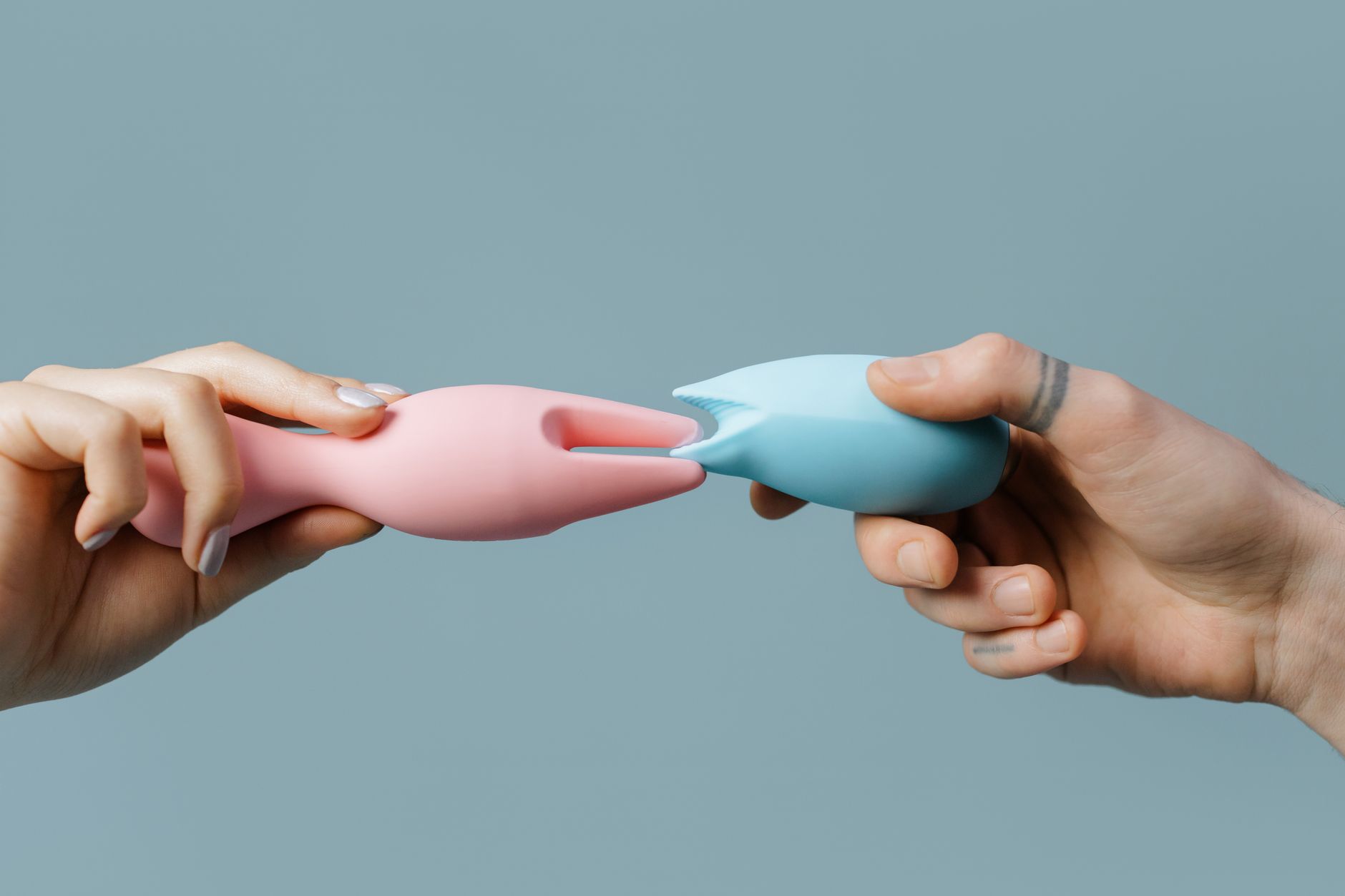
Lemon vibrators solve a specific problem in this moment. They're not about novelty or performance. They're about lowering the activation energy to pleasure so you can remember why you wanted each other in the first place.
Why lemon vibrators are different for partners trying to reconnect
Most couples in this position try one of two things. They either avoid sex entirely (the path of least resistance) or they pressure themselves into something that feels like work. "Let's have sex on Saturday." Then Saturday arrives and nobody's in the mood because it's been framed as an obligation.
Lemon clitoral vibrators interrupt this pattern because they feel less like "sex" and more like foreplay. They're tactile, they're intimate, and they don't require the full production that penetrative sex does. This matters for partners who've been disconnected.
They also do something physiologically important. When you've gone months without arousal, your body needs reminding. Your tissues need that neural stimulation. A lemon vibrator's suction pattern works quickly and efficiently, which means pleasure isn't contingent on hours of effort from either of you. It's faster. It's gentler. It gets you there.
And here's the part that shifts things emotionally. When one partner is using a Lemon vibrator and the other is watching, participating, holding them, or simply present, it removes the performance anxiety that stalls most long-term couples. You're not trying to be sexy. You're not waiting for your body to cooperate. You're just allowing pleasure to happen while someone who loves you bears witness.
The conversation before you introduce a toy
This is where most couples stumble. They buy a vibrator, surprise their partner with it in bed, and then get hurt when the response is confusion or rejection. The surprise isn't romantic in this context. It's loaded.
Honestly, the conversation is brief. You don't need a formal sit-down. Text works. "Hey, I've been thinking about us and sex and how much I miss that. I found this clitoral vibrator called the Lemon that I want to try with you. It's not because anything's wrong with you. It's because I want to feel close again and I think this might help." Full stop.
That's the truth and it disarms defensiveness. The goal is proximity, not problem-solving.
Your partner might be nervous. They might wonder if you're bored with them or if you're comparing them to someone else. Address it directly. "I want you involved because I want us to reconnect. Not instead of you. With you."
How to actually use a lemon vibrator together
Start small. You don't need elaborate choreography.
One partner lies back. The other partner holds the Lemon against the clitoris, starting at the lowest suction setting. This isn't about reaching orgasm. It's about feeling sensation and novelty in a safe context. The partner holding the toy is focused on the other person's body. They're present. They're paying attention.
Conversation during this matters. "How does that feel?" Not as a health check. As an expression of interest. "Tell me what you want." Not as a script. As genuine curiosity about what your partner's body needs right now.
After five to ten minutes of exploration, you can shift. Maybe the person using the vibrator wants to come. Maybe they want to switch and pleasure their partner instead. Maybe you both just want to hold each other afterward. There's no endpoint you're chasing.
One common rhythm that works well. Fifteen minutes of foreplay and touch without the vibrator. Then ten minutes exploring with the Lemon together. Then another twenty minutes of whatever feels natural. Sex, more vibration, just skin contact. The toy is part of the experience, not the event.
Why this approach actually rebuilds intimacy
Sex therapists call this "sensate focus." You're paying attention to sensation instead of performance. You're not worried about erections or coming or whether you look good. You're just feeling and noticing.
For long-term couples, this retrains your nervous system to associate your partner with pleasure again. Your brain stops filing sex away as "maintenance" or "obligation." It starts recognizing your partner as a source of good feeling.
And practically speaking, when one partner gets consistent pleasure via a lemon clitoral vibrator, their overall interest in sex increases. This is a documented thing. Regular orgasms create more desire for more orgasms. You're not gaming the system. You're just allowing your body's natural feedback loop to work.
The permission piece
Here's what I see in my practice constantly. Long-term partners stop asking for pleasure because they've internalized the idea that wanting sex is selfish. They tell themselves their partner's tired. They should be satisfied with what they have. They don't deserve novelty.
A lemon vibrator gives you permission to say explicitly, "My pleasure matters. I want to feel good. I want us to share that." And when your partner agrees to participate, they're not just using a toy. They're saying back to you, "You matter. Your pleasure matters to me."
That's the real reconnection. The vibrator is just the vehicle.
Logistics that nobody mentions
Keep the Lemon somewhere accessible. Not hidden in the back of a drawer. Somewhere you both know it's there. Some couples keep it on a nightstand. Some in a bedside table. The visibility normalizes it. It becomes a regular part of your intimate toolbox.
Water-based lube helps. Not because anything's wrong with your body, but because a little additional lubrication makes the sensation smoother. It's not a health indicator. It's just a comfort thing.
Clean it with soap and water after use. The Lemon is medical-grade silicone, so it's built to last. Taking care of it extends the life of the connection it facilitates.
When reconnection stalls despite trying
If you've tried this approach and desire still isn't returning, that's real information, not failure. Sometimes the distance is too deep. Sometimes there are relationship issues underneath that need a different kind of attention.
A couples therapist who specializes in intimacy can help you excavate what's actually going on. Maybe it's resentment that hasn't been addressed. Maybe it's stress that's bleeding into your bedroom. Maybe it's hormonal changes or medication side effects. Those are separate conversations from "can we use a vibrator together."
But the majority of couples I work with find that when they approach a tool like a lemon clitoral vibrator as a genuine invitation back into pleasure, something shifts. Not immediately. But over weeks, over months. The sex becomes less rare. The desire returns. The connection that felt lost starts feeling possible again.
FAQ
Can using a vibrator together damage long-term relationships?
No. The damage happens when couples stop trying to be intimate at all. Introducing a tool shows you're actively choosing to reconnect. It's the opposite of giving up. It's saying, "I want this. I want us. What can I do to make that possible?" That commitment is what heals partnerships, not what hurts them.
What if my partner thinks the vibrator means I'm bored with them?
That concern is completely normal and worth addressing directly before you start. Tell them plainly. "I want this because I miss feeling close to you. Not because you're not enough." Then show them by being genuinely present and attentive when you use it together. Actions back up words. Presence backs up words.
How often should we be using a lemon vibrator if we're trying to reconnect?
Start with once a week or every other week. This isn't about frequency. It's about consistency and signal. Your body and brain need to know this is a regular part of your intimate life now, not a one-off experiment. After a few months, you might find you naturally shift to a rhythm that feels right.
What if I want to use the vibrator alone, not with my partner?
That's fine. Partnered pleasure and solo pleasure are different experiences. Both matter. If you want to use a lemon vibrator by yourself, do that. Your partner doesn't need to be involved in every aspect of your sexual life. Solo touch is healthy and normal. Just be open about it if asked. No secrecy needed.
Is there a "right" way to use a lemon vibrator with a partner?
No. There's the way that feels good to you both. Some couples like the Lemon used externally during sex. Some use it during foreplay. Some use it as the main event. There's no performance criteria. If you both felt something and want to do it again, you did it right.
What if we're trying to reconnect but the issue is deeper than just lost sexual desire?
Vibrators help with one part of reconnection. Pleasure. But if the foundation is broken due to infidelity, unresolved conflict, or emotional distance, a toy won't fix that alone. You might need couples counseling alongside exploring physical intimacy. Both can run in parallel. The vibrator can help the body remember what's possible while you both work on what's underneath.
The point
After years together, you both know how to have sex. What you've forgotten is how to play. How to be curious about each other. How to make your partner's pleasure a project worth your attention. A lemon clitoral vibrator doesn't fix your relationship. It creates space for reconnection to happen. What you do with that space is up to you. If you're stuck and want guidance on rebuilding intimacy in your partnership, reach out and let's talk through it.