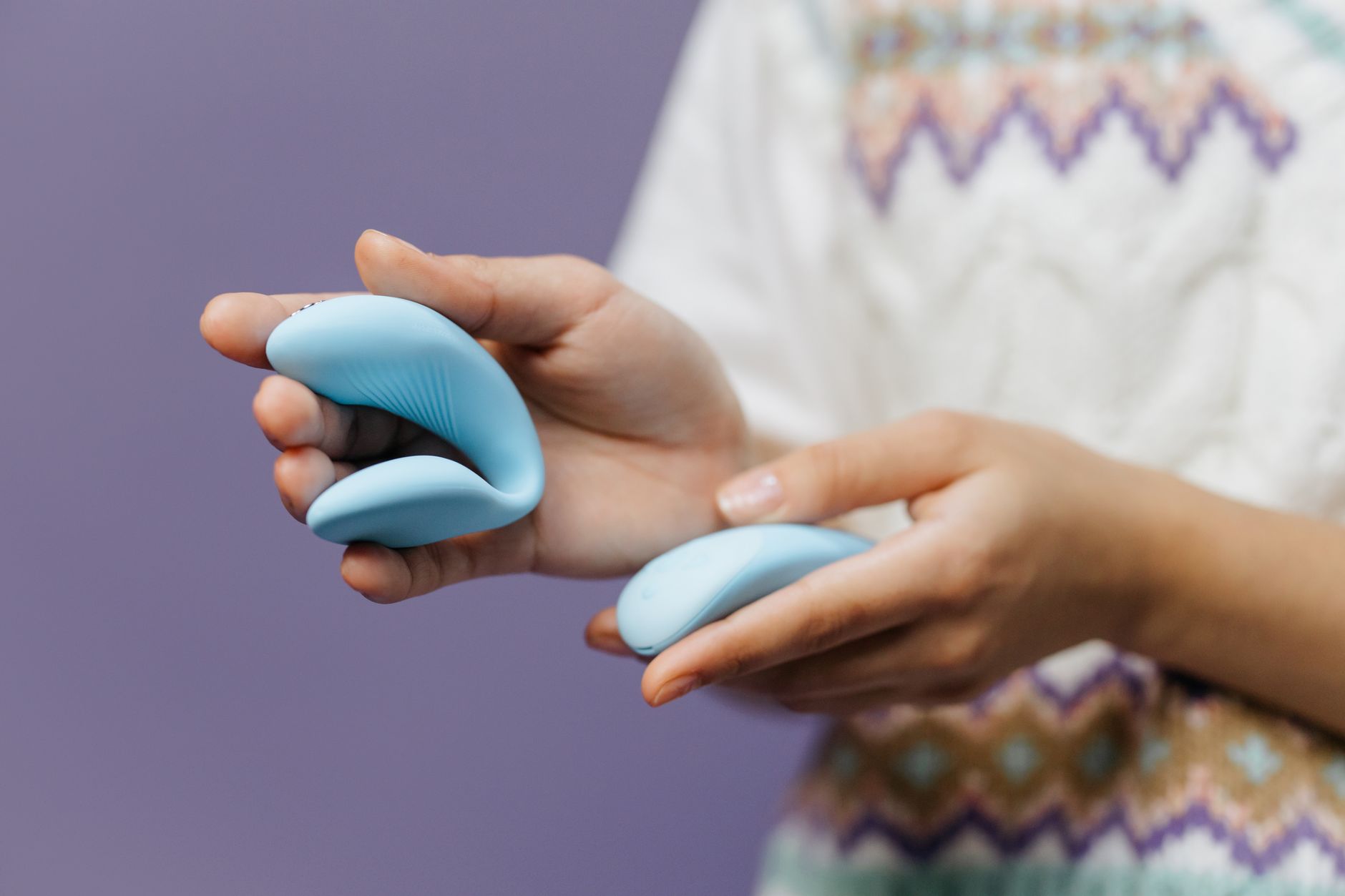
Here's the thing about taking a long break from pleasure
Your body doesn't forget how to feel good. But your nervous system does get rusty. After months or years without sex, masturbation, or any kind of sexual touch, the pathways that light up during arousal need time to reboot. That's not weakness. That's just how the brain works.
The good news? A gap doesn't erase your capacity for pleasure. It just means the reentry needs to be strategic instead of ambitious. This is where lemon vibrators shine. They're engineered for gradual, consistent stimulation without the intensity that can overwhelm a body that's been offline for a while.
Why returning to pleasure is harder than you think
When you've been away for a long time—whether from life stress, relationship breakdown, health issues, or just exhaustion—a few things happen simultaneously:
Your clitoris becomes slightly less sensitive to touch. This isn't permanent. It's a bit like a muscle that's been rested. Without regular arousal, the tissues don't get the blood flow they're used to, and the nerve pathways quiet down. Your brain also has to relearn the signals. After a gap, many people report that arousal takes longer to build or feels muted at first. That's normal. And it's temporary.
The second issue is psychological. Pressure kills arousal faster than almost anything else. When you're coming back to pleasure, the pressure to "perform," to feel instantly turned on, or to match some imagined baseline from before your gap can actually make arousal harder to access. Your body knows when your brain is grading the experience.
Why lemon clitoral vibrators work well for reentry
Lemon vibrators are air-suction devices, not traditional vibrators. They use gentle, pulsing suction rather than buzzing friction. For someone returning to pleasure, this matters because:
Suction stimulation wakes up nerve endings without requiring the kind of direct friction that can feel intense or even uncomfortable if you're out of practice. The sensation is novel enough to feel interesting but gentle enough that you can control the intensity from the very first pattern. Most lemon vibrators offer five to seven intensity levels. You'll start on pattern one and work up—or never move past it. Both are fine.
They also don't require a partner, ongoing erection, or any performance component. You can use a lemon vibrator solo, at your own pace, with the door locked and nowhere to be. That psychological safety is half the battle when you're rebuilding arousal.
The three-week reentry protocol
I recommend thinking of your return to pleasure in three phases, each about a week long. This is a guide, not a rigid rule. Your timeline might be faster or slower, and that's okay.
Week 1: Exploration without expectation. Spend time just getting familiar with your lemon vibrator with your clothes on. Hold it, charge it, read the controls. Place it against your vulva over underwear or pants. No goal of arousal here. You're just teaching your nervous system that this object is safe and can feel good. Spend 10-15 minutes, a few times this week. Low patterns only. Notice what patterns feel interesting versus overwhelming.
Week 2: Skin contact, still no pressure. Now spend time with the device directly on skin, but outside any goal of orgasm. Use water-based lubricant (all silicone toys benefit from it). Place the lemon vibrator against your clitoris on the lowest pattern and just notice the sensation. Some people feel warmth, others feel a gentle buzzing, others feel curiosity without much sensation at first. All of it is normal. Spend 15-20 minutes when you feel even slightly interested. Not when you're already aroused. You're building the arousal by using the tool, not arriving already turned on.
Week 3 and beyond: Play with patterns and duration. By now your nervous system has reset a little. You're ready to experiment. Try moving between patterns. Notice which ones feel best to you. Some people find that alternating between two patterns creates more intensity than staying on one. Spend 20-30 minutes. If orgasm happens, great. If it doesn't, that's also fine. You're rewiring your arousal response, and that takes time.
What to do if arousal still feels flat
Most people regain sensation and arousal within two to four weeks using this approach. But some take longer, and that's worth checking in with.
If you're past week four and arousal feels completely absent, look at three things first. Are you stressed or sleeping poorly? Chronic stress and sleep deprivation kill arousal harder than almost anything else. Address those first—more pleasure awaits you once you do.
Second, is anything physical going on? Hormonal birth control, antidepressants, blood pressure medications, and other drugs can genuinely flatten arousal. If you suspect a medication, talk to your doctor. Sometimes a dose adjustment or switching to a different medication helps. You don't have to accept low libido as a side effect.
Third, are you using lubricant consistently? This is non-negotiable. Even if you think you don't need it, use it anyway. Lubricant isn't a sign of dysfunction. It's a tool that makes pleasure easier and removes friction (literal and psychological) from the experience.
Solo vs. partner reentry
If you're rebuilding arousal solo, the path is straightforward. You're learning your own body again without anyone else's needs in the mix. Take the time you need.
If you're rebuilding arousal within a partnership or dating context, add one crucial step. Tell your partner where you are. "I'm coming back from a long break, so arousal is slower to build right now. I'm using tools that help me reconnect with my body. That's not a reflection of how I feel about you." Most partners find this reassuring. It removes the pressure they might otherwise feel to "fix" your arousal or worry that it's about them.
Some couples use lemon vibrators together during this period. If that feels right, it can help. But solo exploration first is almost always easier because you remove one more variable while you're rewiring.
The patience part (and why it matters)
If there's one thing I'd tell someone returning to pleasure after a long gap, it's this: your body will not punish you for the time away, but your brain might try to. Watch for the voice that says "I should be back to normal by now" or "It shouldn't be this slow." That voice is lying.
Rebuilding arousal takes patience. Lemon vibrators help by removing barriers—they're not intense, they don't require a partner, they work with your body's natural rhythms. But even the best tool can't bypass the time piece of healing.
You're not broken. You're just coming online again. And that's worth doing right.
Frequently asked questions
How long does it typically take to regain full arousal after a long gap?
Most people regain noticeable arousal within two to four weeks of consistent, low-pressure exploration. "Full" arousal—the intense, fast-building response some people remember—can take eight weeks or longer. This isn't failure. Many people find that arousal after a gap is actually more nuanced and controllable than it was before. You're not trying to match a old baseline. You're finding your new one.
Is it normal for orgasms to feel different when returning to pleasure?
Completely normal. After a gap, orgasms often feel softer, more localized, or slower to build than you remember. This is temporary. Your nervous system is recalibrating. Some people find their orgasms become stronger over time, others find they're happier with this new, quieter version. Pay attention to what your body actually feels, not what you think it should feel.
Can lemon clitoral vibrators help if medication is affecting my arousal?
Partly. A lemon vibrator can help wake up sensation and build arousal, but if medication is the root cause, addressing that with your doctor will help more. That said, using a tool like a lemon vibrator while you're working with your doctor on medication adjustments can make the transition smoother and help you track whether feeling is returning.
Should I use lube with a lemon vibrator?
Yes. Water-based lubricant makes the experience gentler and removes friction that can feel uncomfortable or numbing if your body is out of practice. Apply it fresh as needed throughout your session. It's not optional, and it's not a sign that something's wrong. It's a tool that makes pleasure easier.
What if I feel nothing even with consistent use?
Give it at least four weeks before deciding that nothing's happening. After that, check three things: stress and sleep quality, medication side effects, and whether you're actually in a headspace where pleasure is allowed (not rushed, not guilt-laden). If all three are solid and sensation is still completely absent after six weeks, talk to a doctor. Sometimes low sensation points to a hormonal issue or a side effect that needs professional support.
Can I use a lemon vibrator if I'm in a relationship but my partner isn't interested in participating?
Yes. Solo pleasure is valid and important, especially when you're rebuilding arousal. Your partner doesn't need to participate for this work to matter. Using a lemon vibrator alone helps you reconnect with your own body, which actually strengthens most relationships by removing pressure from the partner to "fix" your arousal.
Getting back is easier than you think
Returning to pleasure after a long gap isn't about forcing yourself to feel something you don't. It's about creating the conditions where arousal can rebuild naturally. Lemon vibrators do that by offering gentle, controllable stimulation that wakes up sensation without intensity.
Start slow. Use lube. Be patient with yourself. And trust that your body remembers how to feel good. It just needs a little time to wake up.
If you'd like personalized guidance on rebuilding intimacy and pleasure within your relationship or after a significant gap, we're here to help. Reach out at /contact to talk through what you're experiencing.