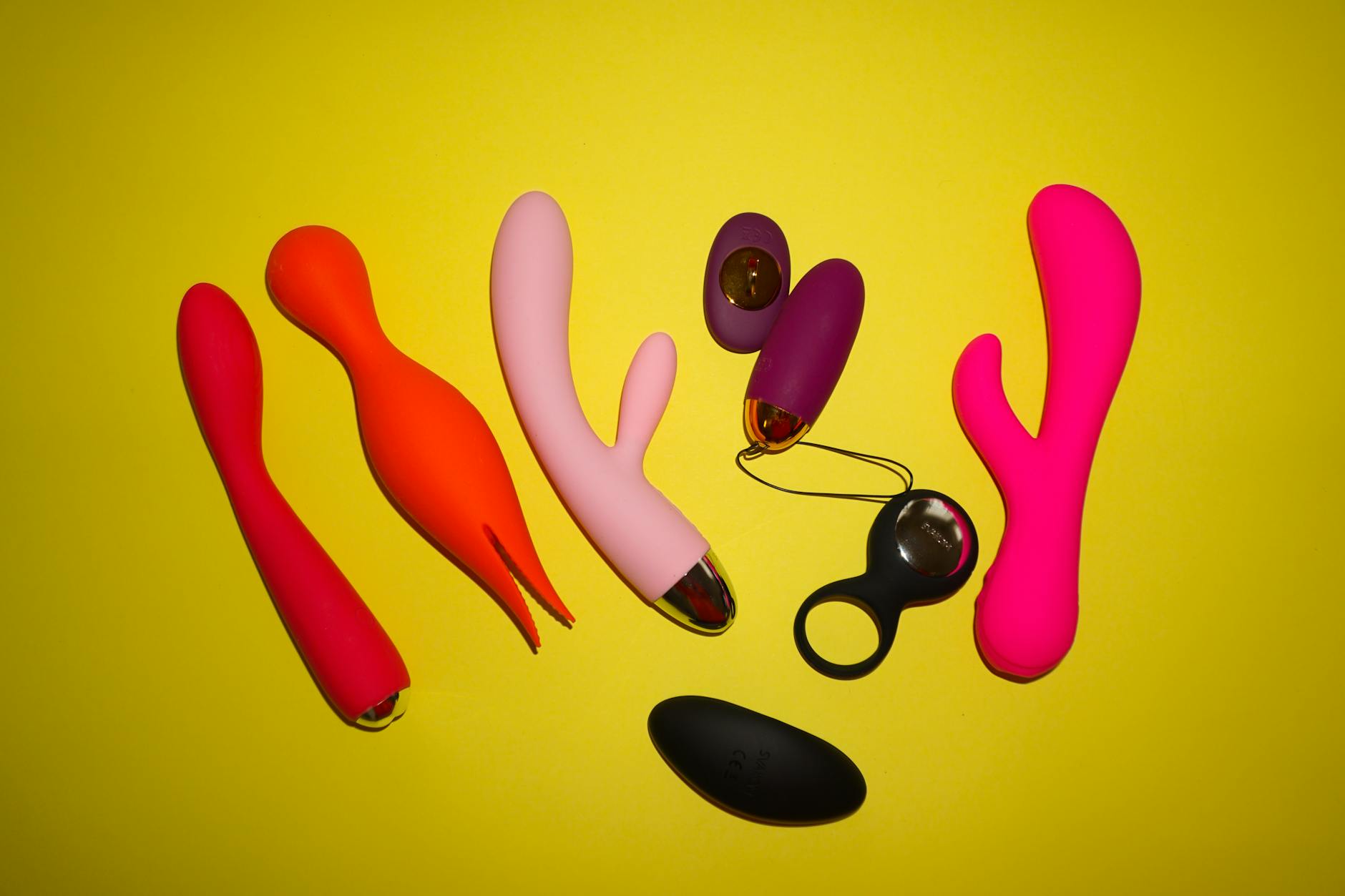
Let's be real about what stress does to your body
Anxiety doesn't just live in your head. It lives in your nervous system, your pelvic floor, your ability to trust sensation, and honestly, your orgasms. When you're stressed, your body floods with cortisol and adrenaline. Your nervous system shifts into a protective crouch. Blood flow pulls away from pleasure zones and redirects to your muscles, your heart, anywhere that might help you "fight or flee." Arousal requires the opposite state. It requires safety, blood flow to your genitals, and a nervous system that's willing to let its guard down.
This isn't a character flaw. This is physiology.
The tricky part is that anxiety about lost pleasure creates more anxiety, which kills more pleasure. You end up in a loop. The good news: lemon vibrators and other clitoral toys can actually interrupt that loop because they work with your nervous system, not against it. Let me explain how.
How anxiety locks down your sexual response
Your nervous system has two main modes: sympathetic (fight-or-flight) and parasympathetic (rest-and-digest). Sex lives in parasympathetic territory. Anxiety keeps you locked in sympathetic mode. Your muscles stay tense, your mind stays vigilant, and arousal feels distant or impossible.
When you're stressed, two things happen at once. First, your clitoris might feel numb or disconnected, not because the nerve endings are gone, but because your nervous system isn't allowing sensation through. It's like the signal is being blocked before it reaches your brain. Second, even if you do feel something, your mind is often miles away. You're thinking about the thing that stressed you out, not the sensation you're trying to create.
Lemon vibrators and other clitoral vibrators don't cure anxiety, but they can help reset your nervous system by offering consistent, gentle stimulation that tells your body "it's safe to feel something now." Unlike penetration, which might feel vulnerable or triggering when you're stressed, external clitoral stimulation is more directional. You control it entirely. You can stop instantly if you need to. That control matters when your nervous system is learning to trust again.
Start with breathing and grounding, not jumping straight to the vibrator
Here's where most people skip the essential step. You can't vibrate your way out of a locked nervous system. The vibrator is part two, not part one.
Before you even touch a lemon vibrator, your nervous system needs to downshift. This takes maybe five to ten minutes. Try this: lie down somewhere you feel safe. Close your eyes. Breathe in for a count of four, hold for four, breathe out for six. The longer exhale signals your nervous system that the threat has passed. Do this ten to fifteen times. You'll feel it. Your shoulders will drop. Your jaw will unclench.
While you're breathing, notice where you're holding tension. Most people with anxiety hold it in their pelvic floor, their jaw, their shoulders. Just notice it. Don't try to force it to relax. Forcing makes it worse.
Once your breathing has slowed, do a quick grounding check. Notice five things you can see, four you can touch, three you can hear, two you can smell, one you can taste. This sounds almost comically simple, but it pulls your awareness out of the anxious loop and into your actual body, in actual time, in an actual safe space. Then, when your nervous system has genuinely downshifted, you can introduce the vibrator.
Use gentler settings first, even if you think you want intensity
When you're stressed, your impulse might be to go for the strongest sensation and blast through the numbness. Resist this. It usually backfires. Instead, start with the lowest or second-lowest setting on your lemon clitoral vibrator. The goal isn't orgasm right now. The goal is reconnection.
Begin with the vibrator over your underwear or through a thin layer of fabric. This softens the sensation just slightly and lets your nervous system know that sensation is happening without feeling shocking. Spend a few minutes here. Let your body adjust. Notice what you feel. If you feel nothing, that's normal. Numbness is part of anxiety. Don't panic. Just stay with it.
After a few minutes, if it feels okay, move the vibrator directly to your clitoris without lubrication first. Yes, this sounds counterintuitive. But here's the thing: when you're anxious and numb, you often need direct, consistent pressure more than gliding sensation. A lemon vibrator's suction mechanism is perfect for this because it holds steady contact. If adding lubrication helps, do it. But it's not mandatory on the first attempts. You're not trying to feel amazing yet. You're just trying to feel.
Expect a different experience than you remember
Here's what I hear from clients most often: "I used to come easily, and now it feels flat." Or "I can feel it happening, but it's not the same." This is anxiety's calling card. The sensation might actually be there, but your nervous system is partially dampening it as a protective mechanism. This is infuriating, I know. But it's also fixable.
The first few times you use your lemon vibrators after a stress period, don't expect the same orgasm you used to have. Expect something smaller, quieter, sometimes almost underwhelming. This is progress. You're teaching your nervous system that sensation is safe again. Each time you do this, the signal gets slightly stronger. The pathway between your clitoris and your brain gets slightly more open. But it happens gradually.
During these first reconnection sessions, focus on sensations rather than outcomes. Can you feel the vibration? Can you feel it more after two minutes than you could after thirty seconds? Is there a spot that feels better than another? These micro observations are you rebuilding trust in your own body. That's the real work.
Create conditions that support parasympathetic activation
The environment matters more than you think when you're recovering sensation from stress. You want to stack every possible signal that tells your nervous system "this is safe and worth paying attention to."
Dim the lights. Your parasympathetic system associates brightness with alertness. Soft lighting signals rest. Turn off your phone or put it in another room entirely. Seriously. The phantom vibration from a text notification will jolt you back into sympathetic mode instantly. Choose a space where you won't be interrupted. Even the possibility of interruption keeps some people's nervous systems slightly contracted.
Temperature matters too. A body that's too cold will stay tense. Many people find a light blanket over their legs or a warm room helps them relax enough to feel sensation. Some people play soft music or ambient sound. Others prefer silence. Experiment and notice what actually helps your nervous system settle, not what you think should help.
If you're doing this with a partner, ask them to be present without pressure. They can be in the room, but not watching or waiting for results. Their job is just to hold space, knowing that sensation might take time to return. If they seem anxious or impatient, that anxiety bleeds into you. Save this work for when they can genuinely just be present.
The pattern: three to five short sessions before you push for more
Don't try to have an orgasm on session one. Try again on session two with the expectation of an orgasm. That's a recipe for more frustration. Instead, commit to three to five sessions of ten to fifteen minutes each, all with the sole goal of noticing sensation. No agenda. No outcome.
Session one: you breathe, ground, and try the lowest setting of your lemon vibrator. You notice what you feel. You stop after ten minutes whether anything has happened or not.
Session two: you follow the same pattern. You might feel slightly more this time. Or the same. Either is normal.
Sessions three through five: you continue experimenting. Maybe you try moving the vibrator in small circles rather than holding it still. Maybe you try a higher setting. Maybe you spend more time on one side than the other. You're mapping what works for your nervous system right now, not what worked for you before.
Only after several sessions of gentle reconnection do you ask your body to build toward orgasm. By then, sensation is usually returning. Your nervous system has gotten the memo that feeling something is safe.
When to reach out for professional support
Here's the thing about anxiety-blocked pleasure: sometimes it's situational and temporary. Stress from work eases, you reconnect with sensation, life moves on. But sometimes anxiety is deeper. Sometimes it's rooted in trauma, in relationship patterns, in a nervous system that's been dysregulated for years.
If you've given this approach a genuine try for two to three weeks and sensation still isn't returning, or if the anxiety feels insurmountable, that's not a sign you're broken. That's a sign you need a specialist. A therapist trained in somatic work or nervous system regulation can help you understand why your particular nervous system locked down and how to help it open again. A sex therapist can work with you and your partner if you're worried about navigating this together. These are trained professionals. They've helped people through this countless times before.
Lemon vibrators and clitoral vibrators are tools. They're really good tools. But they're not the only tool. Sometimes you need both the vibrator and the therapist.
FAQs
Why does anxiety make orgasms harder even when I can feel physical sensation?
Anxiety splits your awareness. Part of you is present with the sensation, but another part is monitoring for danger, thinking about what you're worried about, or tracking whether you're "doing it right." This divided attention dampens the building sensation. Orgasm requires integrated attention. When you're anxious, your brain can't fully commit to the pleasure signal. This is why grounding and breathing before using your lemon vibrator matters so much. You're pulling your whole brain back into the present moment.
Can stress permanently damage my ability to orgasm?
No. Your nervous system is remarkably plastic. It learns and relearns constantly. If stress has temporarily blocked sensation, that blockage can be lifted. It usually just takes patience and the right conditions. People return to full pleasure capacity after stress all the time.
Should I use my lemon clitoral vibrator when I'm in the middle of a panic attack?
Not during the peak of a panic attack, no. Your nervous system is in full alarm mode and won't respond well to stimulation. Wait until the acute panic has passed and you're in the post-panic phase where you're tired but calmer. That's when gentle reconnection work can help.
Is numbness from anxiety different from numbness from other causes?
Similar but not identical. Anxiety numbness usually comes with a sense of disconnection and mind-wandering. Numbness from medication, hormonal changes, or nerve issues feels more like the sensation apparatus simply isn't working. You might need different approaches depending on the source. If you're unsure, a gynecologist or sex therapist can help you figure out what's actually happening.
Can my partner help with this, or should I do it alone?
Both can work. Some people find partnered pleasure helps them reconnect because they feel witnessed and supported. Others find it adds pressure. Solo sessions with your lemon vibrators let you focus purely on your own sensation without any performance anxiety. Many people do a mix: some sessions solo to rebuild the neural pathway, then partnered sessions once sensation is returning.
How long does it usually take to feel normal again after stress blocks pleasure?
It depends on how long you were stressed, how deeply it affected you, and how consistently you're doing reconnection work. Some people notice shifts within two to three weeks of regular sessions. Others take longer. The key is gentle consistency, not force. You're rewiring, not fixing.
Getting your nervous system back online takes patience, not panic
Anxiety-blocked pleasure is temporary. It feels permanent in the moment, but it's not. Your body wants to feel good again. It wants to be aroused. It wants to have orgasms. It just needs you to create the conditions where that's possible: safety, downtime, gentle reconnection, and tools like lemon vibrators that give you control and consistency.
Start small. Breathe first. Let the vibrator be part of a larger conversation with your nervous system, not a quick fix. And if you need professional support, that's not a failure. That's wisdom. Your pleasure is worth the investment in getting it back.