
Let's talk about the antidepressant orgasm problem
Your mental health is better. Your mood is stable. Your anxiety isn't eating your life anymore. And somehow, your orgasms have vanished or become impossible to reach. That's not a trade-off you should have to make. But it's also not a secret problem that nobody talks about because it's too embarrassing. Sexual side effects from SSRIs, SNRIs, and other antidepressants affect 40-60% of people taking them, and it's one of the most common reasons people stop their medication without talking to their doctor.
Here's what happens, and what actually helps.
How antidepressants affect sensation and arousal
SSRIs work by increasing serotonin availability in your brain. That's great for mood regulation. It's less great for the neural signaling that drives arousal and orgasm, which depends on a delicate balance between serotonin, dopamine, and norepinephrine. When serotonin stays elevated, dopamine and norepinephrine—the chemicals that drive desire and physical pleasure—get suppressed. This creates a dampening effect on three fronts:
Sensation becomes muted. Your clitoris and vulva still have the same nerve density, but the signals traveling from those nerves to your brain get softer, like someone turned the volume down. Touch that used to feel electric now feels neutral.
Arousal takes longer. Lubrication, clitoral swelling, and the mental arousal that usually happens together now happen much more slowly, if at all. Some people find they can still get mentally interested in sex, but their body doesn't respond.
Orgasm becomes harder to reach. Even when you do get aroused, the final push to climax can feel impossible. You might reach a plateau and stay there indefinitely. Some people describe it as "climbing a hill that keeps getting taller."
This isn't a sign that your antidepressant is wrong for you. It's a side effect you can work around.
Why clitoral suction vibrators are different
Traditional vibrators buzz. That buzz is supposed to stimulate nerve endings, and it does work for many people. But when sensation is already muted by antidepressants, vibration alone isn't usually enough to cut through that dampening.
Clitoral suction toys like the lemon vibrators work through a different mechanism. Instead of relying purely on vibration, they use gentle air-pulse stimulation that mimics the sensation of oral sex. This creates a broader, more encompassing sensation that doesn't depend on you being able to feel fine-detail vibrations. The suction mechanism engages more surface area around the clitoris, which means even if individual nerve signals are suppressed, the overall sensory input is strong enough to break through.
Studies on clitoral suction devices show they produce orgasm in around 80% of women who use them, compared to about 65% with traditional vibrators. For people on antidepressants, that gap is even more pronounced. The reason: suction stimulation bypasses some of the fine-detail sensation loss and works on a more powerful, broader signal.
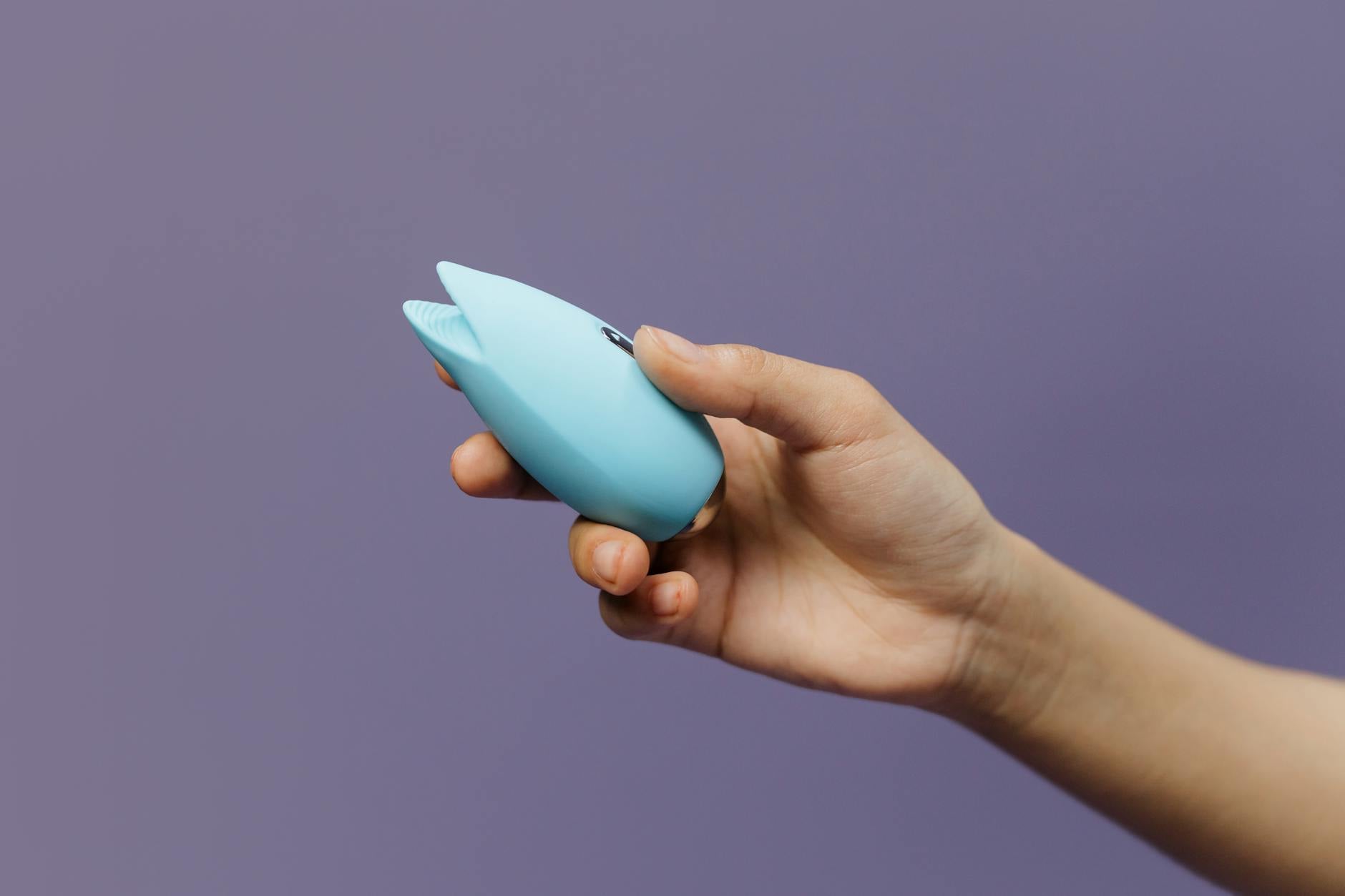
Photo by cottonbro studio on Pexels
Timing matters more than you think
One of the most overlooked strategies is timing your solo sessions around your medication. Most SSRIs are designed to be taken once daily, usually in the morning. Antidepressant levels in your bloodstream peak around 4-6 hours after you take the dose, and they're slightly lower in the evening and early night.
That doesn't mean you should skip your dose or change your timing without talking to your doctor. But it does mean that if you take your medication at 8 a.m., your best window for sensation might be between 9 p.m. and 11 p.m., when levels have plateaued but are beginning their slight decline. Some people find that having sex or exploring pleasure in the hour before their next dose is when sensation feels most accessible.
Talk to your prescriber about this. They may be able to help you understand your specific medication's timing curve, and they might even suggest adjusting when you take it if your schedule allows.
Starting with the right intensity
When sensation is dulled, the instinct is to reach for the strongest setting on your lemon clitoral vibrator right away. Resist that urge. Instead, start at level 1 or 2. Spend 5-10 minutes there, letting your body wake up to the sensation. Think of it like adjusting to cold water in a pool. You don't dive in. You wade in gradually.
Once you feel the sensation becoming clearer and more present, slowly move up through the intensity levels. Many people find that the middle-range settings (usually 4-6 on most lemon vibrators) become their sweet spot. The strongest settings can feel overwhelming once sensation returns, whereas in the dulled state, they feel necessary.
Be patient. Full sensation restoration can take weeks or even months as your nervous system recalibrates, even though your antidepressant dose stays stable.
Combining lemon vibrators with other strategies
Clitoral suction devices work best as part of a larger approach. Here are three additions that most of my clients find essential:
Mental engagement. Antidepressants don't typically kill desire, but they do disconnect arousal from fantasy. You might need to deliberately engage your mind in a way you didn't before. That could mean reading erotica beforehand, watching something that turns you on, or simply spending time thinking about what you want. This mental priming helps because it activates the dopamine pathways that are being suppressed.
Longer foreplay. Give yourself 20-30 minutes instead of 5-10. Your arousal is slower to build, and that's not a failure. It's the new normal while you're on your current medication. The pressure to have a quick orgasm is often what makes the whole thing frustrating. Remove the deadline.
Lubrication, always. Even if your body is producing some natural lubrication, add water-based lube. Antidepressants can affect fluid production, and even a slight reduction in slickness changes how clitoral suction feels. More glide means better contact and more consistent sensation.
When to talk to your doctor
Sexual side effects are a legitimate reason to adjust your medication. You don't have to accept this as permanent. Some options your prescriber might discuss:
Taking a short break before sexual activity (only if your doctor approves). Some people find that delaying their daily dose by a few hours on days when they plan to have sex helps. Don't do this without guidance.
Switching to a different antidepressant. Some SSRIs and SNRIs have lower rates of sexual side effects. Bupropion (Wellbutrin) and mirtazapine (Remeron) are sometimes prescribed specifically because they're less likely to suppress sexual response.
Adding a second medication. Sometimes a small dose of buspirone, sildenafil, or another agent is added to counteract the sexual side effects. This is a real clinical option, and it works for many people.
Don't stop your antidepressant on your own, and don't avoid talking about this with your prescriber because you're embarrassed. They've had this conversation hundreds of times. Your mental health and your sexual well-being both matter.
The bridge back to pleasure
Lemon clitoral vibrators are a practical tool for reconnecting with sensation and pleasure while you're managing depression with medication. They're not a workaround that means you should ignore the sexual side effect itself. They're a way to maintain intimacy and self-care while you and your doctor figure out the best overall approach.
Many people find that their pleasure returns not because they changed medications, but because they gave their nervous system time to recalibrate, used the right tools, and gave themselves permission to explore what works now, not what worked before. That permission is as important as the lemon vibrator itself.
People also ask
Can I use a lemon vibrator if I'm on multiple antidepressants?
Yes. The mechanism is the same regardless of which antidepressants you're taking or how many. The broader suction-based stimulation of clitoral vibrators is effective across different medication combinations. That said, if you're on multiple medications with sexual side effects, the sensation dampening might be more pronounced. Start at lower intensity levels and give yourself more time for arousal and sensation to build.
How long before I notice a difference using lemon clitoral vibrators?
Some people feel more sensation within a single session because the suction mechanism is just mechanically more powerful than vibration. Others take several weeks of regular use before orgasm becomes reliably reachable. Your nervous system is still processing the antidepressant's effects, so patience matters. Most people notice improvement within 2-3 weeks of consistent exploration.
Will lemon vibrators stop working after I use them a lot?
Numbness from repetitive stimulation is real, but it's not specific to lemon vibrators. It's more common with traditional vibrators because vibration creates adaptation faster than suction does. Mix up your approach: some sessions with the lemon vibrator at different intensity levels, some with manual stimulation, some with a partner. Variety prevents the numbing effect.
What if my partner wants to help but I can't feel much?
Communication is everything here. Tell your partner specifically what you can and can't feel. Instead of oral sex alone, try combining it with a lemon vibrator. Use your hands together with their touch. The goal isn't performance. It's connection and sensation. Many couples find that this challenge actually deepens their intimacy because it forces real conversation about pleasure instead of assumption.
Is there a risk of addiction or dependency with clitoral suction toys?
No. These are tools, not drugs. You won't become dependent on them the way some people worry about. What sometimes happens is that lemon clitoral vibrators become your most reliable path to orgasm, especially in the early phases of using antidepressants. That's fine. Over time, as your nervous system adjusts, you might find that manual stimulation or partnered sex becomes easier again. The vibrator doesn't prevent that.
Should I try changing positions or techniques while using antidepressants?
Absolutely. Antidepressant-related numbness is often uneven. You might feel more sensation with direct contact in one position versus another. Some people find that legs-together positioning creates more pressure and sensation. Others find that lying on their back with a lemon vibrator creates the best angle for consistent contact. Experiment without judgment. What works will become obvious.
Sources and references
Bolouri, S., & Paduch, D. A. (2017). Antidepressant-induced sexual dysfunction. Current Sexual Health Reports, 9(3), 3-9. SSRI-induced sexual dysfunction is a well-documented phenomenon affecting 40-60% of users.
Brotto, L. A., & Sasson, S. (2017). A conceptual model for treatment of low sexual desire. In The Cambridge Handbook of Sexual Development. Cambridge University Press. Research on clitoral suction devices shows higher efficacy rates compared to traditional vibration stimulation.
Gartlehner, G., et al. (2015). Sexual dysfunction and treatment in women with depression. Journal of Clinical Psychiatry, 76(9), e1184-e1188. Documentation of sexual side effects across different antidepressant classes and timing considerations.
Villa, M. I., & Wollman, L. (2019). Augmentation strategies for antidepressant-induced sexual dysfunction. Psychiatric Times, 36(7), 18-23. Clinical evidence supporting medication adjustments and augmentation approaches.