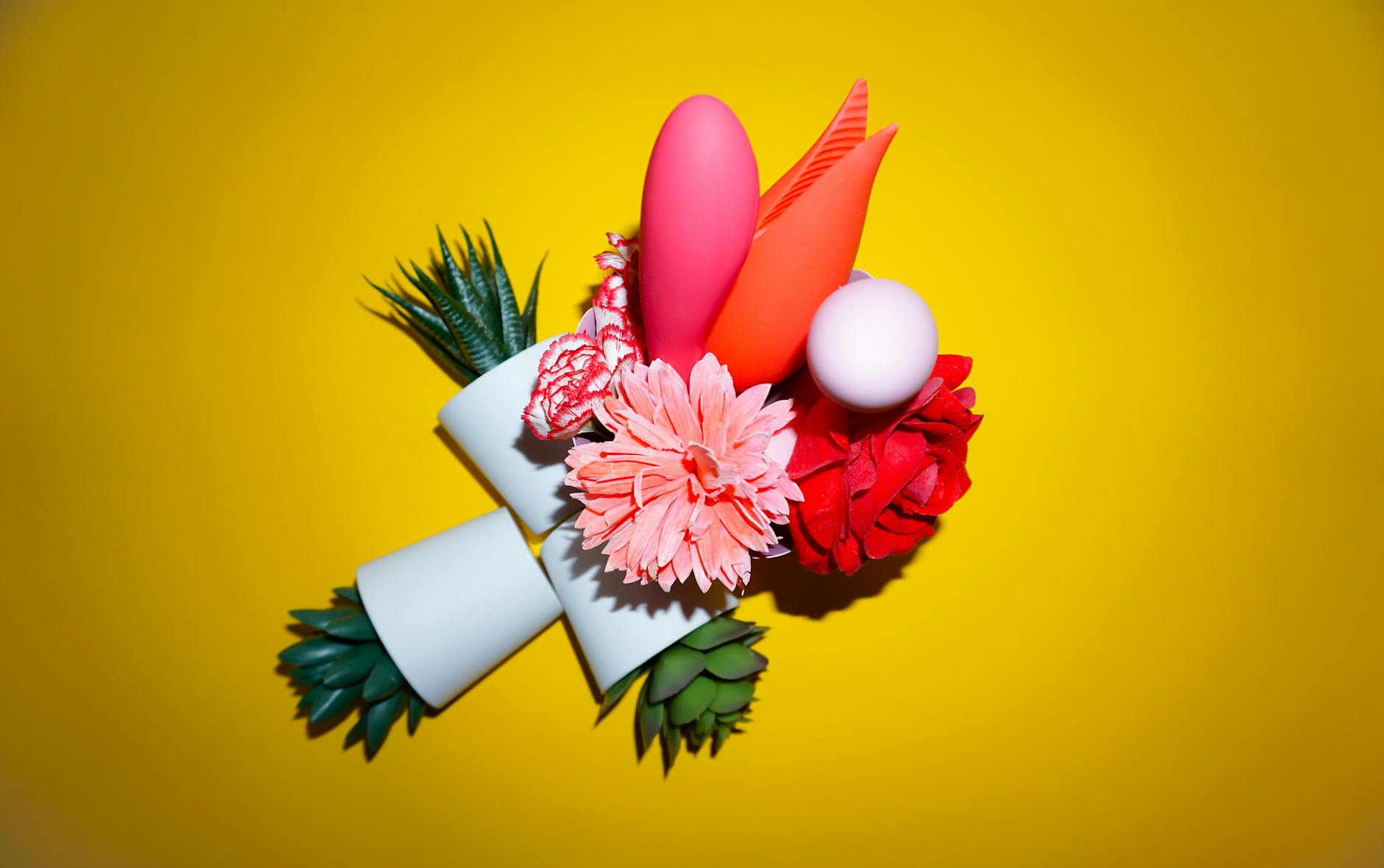
How to Use Lemon Vibrators When You Want to Ease Back Into Pleasure After Health Scares
Let's be real. A health scare does something to your relationship with your body that no amount of reassurance can undo overnight. Whether it's a cancer diagnosis, a cardiac event, surgery, or a chronic illness diagnosis, the moment you hear bad news, pleasure stops being a priority and starts feeling like a betrayal of the seriousness of what's happening. Your body becomes something to manage, not something to enjoy.
But here's the thing: pleasure is actually part of recovery. Not someday, not when everything's fixed. Now. And if you've been grieving the loss of that part of yourself, you're not alone. I work with people every week who are trying to figure out how to want their body again after it's scared them half to death.
The good news is that lemon clitoral vibrators, designed with gentle suction rather than traditional vibration, can be exactly the right tool for reconnecting when your body feels fragile or alienated. Let me walk you through how.
Why pleasure feels impossible after a health scare
Here's what happens neurologically. A health crisis shifts your nervous system into protection mode. Your brain's job becomes "keep this body safe," not "help this body feel good." That's actually adaptive. The problem is that mode doesn't turn off just because the crisis ends. You're left in a state of hypervigilance, scanning your body for danger instead of sensation.
Add to that the physical reality: depending on what happened, your body might actually feel different. Surgery changes sensation. Medications alter arousal. Some treatments create pain where there wasn't any. And then there's the psychological layer. Many people report feeling disconnected from their body, almost like they're looking at it from the outside. That body "let them down." Why would you want to feel it?
This isn't broken thinking. It's a completely normal protective response to trauma. The body kept you alive. Now it needs to feel safe enough to let you feel pleasure again.
The permission conversation you need to have with yourself
Before you touch a lemon vibrator or anything else, there's emotional work. Most people skip this and jump straight to "should I be ready yet?" You're not ready. You don't get to be ready. You have to give yourself permission anyway.
Here's what I mean. Tell yourself: "My pleasure matters. Rebuilding this part of my life is part of my recovery, not a distraction from it. I deserve to feel good in my body again, not someday, but starting today, at whatever pace I choose."
Write it down if you need to. Say it out loud. This isn't cheesy affirmation work. It's the same conversation you'd have if someone told you not to exercise or eat well after a health event. Your brain needs permission to prioritize something that feels selfish when your body has been the problem.
Starting small: the nervous system reset
You don't start with a toy. You start with touch. Not sexual touch. Just... touch. The goal is to help your nervous system recognize that sensation equals safety, not danger.
Take five minutes. Lie down. Run your hands over your arms, legs, torso. Notice temperature, texture, where it feels good and where it doesn't. Notice if your brain wants to narrate ("this area is weak," "that scar looks bad"). Just notice it. Don't fight it. Then redirect: "right now, this is just skin. This is just sensation."
Do this for a week before you bring a toy into it. This isn't wasted time. This is teaching your body that pleasure is possible without stakes.
When you're ready for a lemon clitoral vibrator: how to choose the pattern
Lemon vibrators like the Lem use suction technology instead of buzzing. For people returning to pleasure after health scares, this matters because suction feels gentler, more like stimulation than pressure. You're not forcing anything. The sensation is about drawing and releasing, which mirrors how the body naturally responds to arousal.
When you first turn it on, start at pattern 1. Not because it's "beginner mode," but because your nervous system needs to recognize that a small sensation equals safety. The pleasure doesn't have to be intense to be real.
Linger on pattern 1 for several sessions. Maybe two weeks, maybe longer. The goal isn't to reach climax. The goal is to let your brain learn that this sensation can exist without something going wrong. That alone is the win.
The physical reality: what to expect and what to adjust
After a health event, your body may respond differently. Arousal might take longer. Lubrication might be less abundant, especially if medications are involved. Sensation might feel muted or hyperactive. All of this is normal.
Use a water-based lubricant even if you don't think you need it. It's not about being broken. It's about removing friction so your body can focus on sensation without irritation. Your nervous system is already cautious. Don't give it a reason to be more so.
If pain appears, stop immediately. Not after one more session. Not because you're being tough. Now. Pain after a health event is worth investigating with a healthcare provider. It's not something you should work through with a toy.
Build sessions slowly. Five minutes the first time. Ten the next. You're not training for endurance. You're proving to your nervous system that pleasure can coexist with recovery.
Rebuilding the narrative around your body
This is the part that takes longest. Your body did something scary. Now you're asking it to be a source of pleasure again. That's a big ask.
Many of my clients find it helpful to separate the narrative. "My body had a health crisis" is one story. "My body is also capable of pleasure" is another. Both are true at the same time. You don't have to pick one. Both can live inside you.
If you have a partner, this conversation matters between you too. Some partners become overprotective after a health scare and actually make reconnection harder by treating you like you're fragile. If that's happening, say it clearly: "I need you to see me as someone who's recovering, not someone who's broken. That means meeting me where I am with pleasure, not avoiding it."
For solo pleasure, the narrative is simpler: this is you reclaiming your body. This is you saying "I get to feel good. I deserve to feel good. My health scare doesn't erase that."
When to bring a partner back into the picture
If you're partnered, solo reconnection comes first. Not always by weeks or months, but by sessions. You need to know what your body can feel before you invite someone else into that. This also removes the pressure to "perform" recovery for them.
When you're ready, have an actual conversation. Not mid-attempt. Not "maybe we should..." Sit down and say: "I'm ready to start rebuilding this part of us. Here's what helps and here's what doesn't." If you're using a lemon vibrator, show them. Normalize it. The toy isn't replacing them. It's helping you show them what pleasure looks like for you right now.
Some partners find it threatening. If yours does, that's worth exploring separately. How to Use Lemon Vibrators When There's Friction Between Partners About Toy Use addresses that directly.
The timeline: there is no timeline
Here's what I tell people: your body doesn't care about the calendar. You don't get to set a deadline for "recovered." Some people reconnect with pleasure in weeks. Some take months. Some take a year. All of those are normal.
The metric that matters isn't "how quickly can I get back to where I was." It's "am I moving toward pleasure more than away from it." If you're using a lemon vibrator once a week and it feels good, that's progress. If you skip a month and come back without shame, that's progress.
If you're in a partnership and your timeline doesn't match your partner's, that's worth processing with a therapist who understands health trauma. This isn't a problem you solve with a toy. You solve it with honesty and professional support.
The mental game: pleasure as rebellion
Here's something I've noticed: people who recover best aren't the ones who white-knuckle their way through. They're the ones who decide that pleasure is an act of reclamation. That using a lemon clitoral vibrator isn't "getting back to normal." It's choosing to feel good despite what happened. It's your body saying "yes, that was terrifying, and I also deserve to feel this."
That shift, from guilt to defiance, changes everything. You're not betraying your recovery by wanting pleasure. You're honoring your aliveness. That's the real work.
FAQ
Is it normal to feel nothing the first time I use a lemon vibrator after a health scare?
Completely normal. Your nervous system is cautious. It might take several sessions before pleasure registers as possible. The goal isn't sensation the first time. It's proof to your brain that a toy can exist without danger. Stay with pattern 1 for as long as it takes.
Can I use a lemon clitoral vibrator if I had surgery or radiation in that area?
Depends entirely on where and what kind. Check with your doctor first. They can tell you if scar tissue has fully formed, if sensation is safe, and when it's smart to resume. When they clear you, start incredibly gently. Your tissue is fragile. Use lots of lube and go slow.
What if pleasure triggers anxiety about my health?
That's a sign your nervous system isn't ready yet. It doesn't mean you're broken or that you won't recover. It means you need a few more weeks of gentle touch without a toy. Some people also benefit from working with a trauma-informed therapist during this phase. That's not weakness. That's smart.
How do I know if physical pain during pleasure is "bad" versus just unusual sensation?
Bad pain is sharp, sudden, or radiating. Unusual sensation is different but not scary. If you feel bad pain, stop and check with your doctor. If it's unusual sensation, pause for a week and try again gently. Your body might be learning its new normal.
Can I use a lemon sucker toy if I'm on blood thinners or medications that affect sensation?
Most medications are fine. Some blood thinners mean you should avoid any toy that could cause bruising. Talk to your prescribing doctor. Don't assume it's off limits. Most of the time it's not.
What if my partner wants to help me reconnect but I'm not ready for them to be involved?
Say exactly that. "I need some time alone with this first. I'll let you know when I'm ready." You're not rejecting them. You're being honest about what you need. The best partners respect that because they know it actually speeds up the process.
Pleasure after a health scare isn't a luxury. It's a signpost that you're healing. It's your body saying "I'm safe enough to feel good again." That's not selfish. That's essential. Start small. Be patient. And know that every single time you feel something, you're proving to yourself that you're more than what happened to you.