Let's name the elephant first
Performance anxiety is one of the biggest things nobody talks about. Your partner worries they're not doing enough, not lasting long enough, or not making you feel good. Then they panic about the worry itself, which makes everything worse. It becomes a feedback loop that kills spontaneity and leaves both of you feeling disconnected.
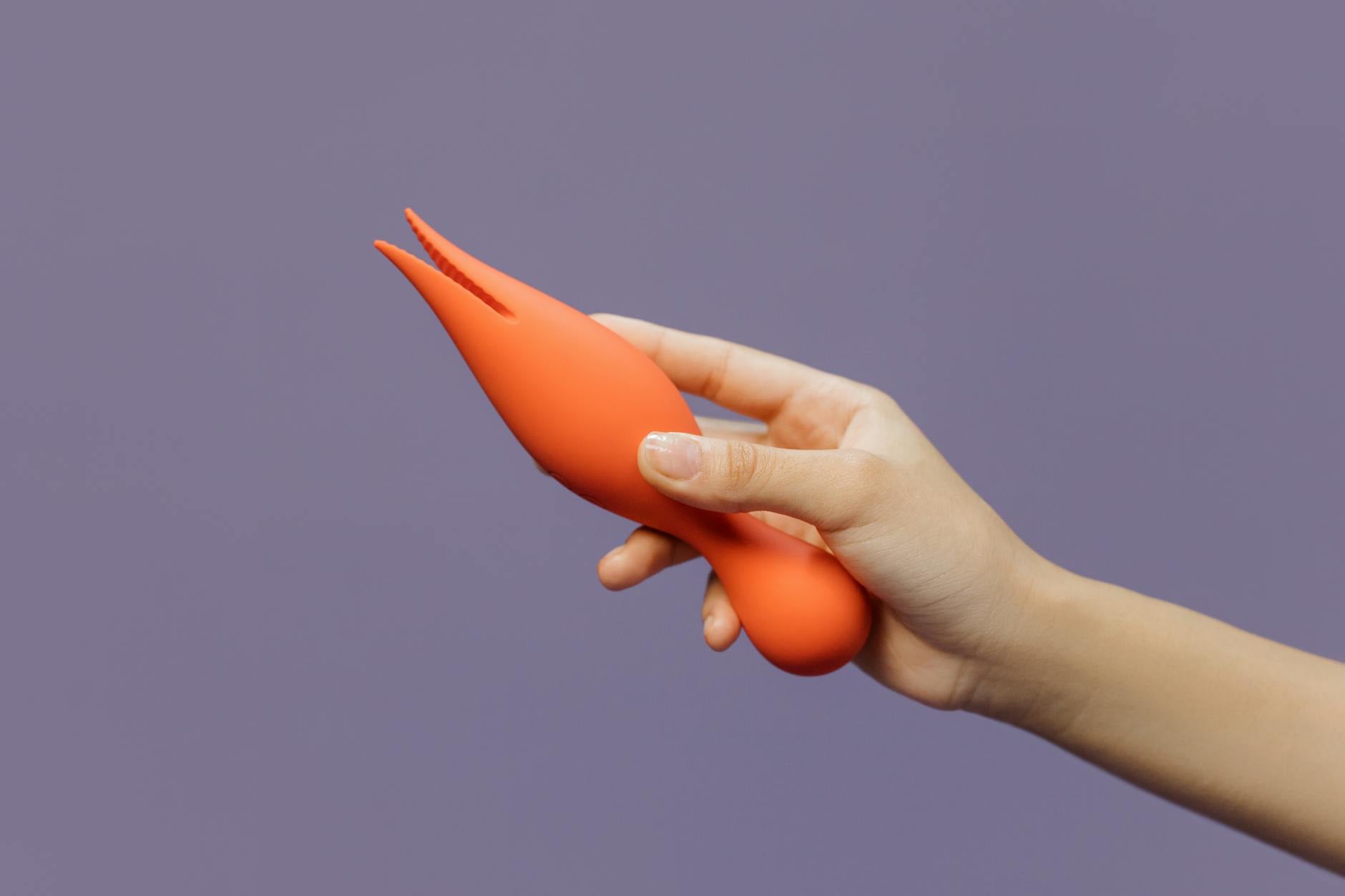
Introducing a lemon clitoral vibrator into that dynamic feels risky. Won't they think you're saying they're not enough? Won't it make the anxiety worse?
Honestly? The opposite. When done right, a lemon vibrator becomes permission for both of you to stop performing and start connecting.
Why performance anxiety gets worse with secrecy
Performance anxiety thrives in silence. Your partner imagines the worst about what you're thinking. You worry about bringing up the vibrator because you don't want to hurt their feelings. Neither of you says anything. The anxiety calcifies.
But here's what research on couples' sexuality actually shows: introducing a toy isn't about your partner failing. It's about expanding what pleasure looks like together. It removes the pressure that one person has to be responsible for another person's orgasm.
That shift matters clinically. When someone with performance anxiety learns that their role has changed from "do everything" to "be present and pay attention," the whole nervous system settles.
The timing conversation matters more than the toy
Don't introduce a lemon vibrator mid-argument or as a solution to a problem. Don't leave one on the bed as a hint. Have the conversation outside the bedroom, when you're both calm.
The opener is everything. Try something like: "I've been thinking about how we could both feel less pressure during sex. I came across this toy, and I'm curious if we could try it together. Not because anything's wrong, but because I want us both to have more fun and less stress."
Notice what's happening there. You're naming the actual problem (pressure), offering a concrete solution (the toy), and reframing it as something that benefits both of you. You're not saying "you're not enough." You're saying "let's change the game."
If your partner resists, don't push. Ask what specifically worries them. Is it about masculinity? About feeling replaced? About the physical experience? Each of those needs a different conversation.
How to frame the lemon vibrator correctly
A lemon clitoral vibrator isn't a replacement. It's an addition. The distinction is crucial for someone with performance anxiety.
What you might say: "I'm really into the sensation of this toy, and I want to use it while we're together. I want to feel good and I also want to feel close to you. Can you help me with this?"
That last phrase is key. "Can you help me" makes it collaborative. Your partner isn't being replaced. They're being invited into something.
Physically, this might look like: you use the lemon vibrator for clitoral stimulation while your partner penetrates, or touches you elsewhere, or just watches and connects with you. The vibrator handles one job. Your partner handles others. Nobody's doing everything. Everyone's doing something.
For a partner with performance anxiety, this is genuinely liberating. They're not failing if the vibrator gets you to orgasm. They're succeeding because they agreed to try something that makes sex better for both of you.
Managing his or her feelings during and after
Your partner might feel vulnerable the first time you use a lemon vibrator together. That's normal. Watch for signs of shutdown: going quiet, tensing up, pulling away mentally.
If that happens, pause. Not the toy. The whole interaction. Check in: "I'm really enjoying this. How are you feeling?"
Create space for honesty. They might say something like "I feel weird watching this" or "I'm worried I'm not helping." These are real feelings that deserve real answers.
You could respond: "I love that you're here with me. The toy is just doing one thing. You're doing everything else I need. I want both." Then restart when they're ready.
After sex, brief reassurance goes a long way. A simple "that felt incredible and I loved feeling you with me" reminds them they still matter. Because they do.
What changes over time
After the first time or two, the novelty fades and the integration happens. Your partner stops seeing the lemon vibrator as a threat and starts seeing it as part of your shared pleasure. The anxiety often melts because the pressure genuinely reduces.
Some partners report that watching their partner use a vibrator is actually deeply erotic. Some find their own arousal increases because they're not in their head about performing. Some discover new positions or dynamics that work better with the toy involved.
The key is consistency and follow-up conversation. If you use the vibrator once and then never mention it again, your partner might assume you didn't like the experience or felt awkward. Instead, casually reference it later: "I've been thinking about last time. I'd like to do that again." It signals that this is normal now, not a one-off experiment.
Common missteps to avoid
Don't use the vibrator as punishment for your partner's anxiety. If they're struggling, introducing the toy more frequently won't fix it. It'll confirm their fears.
Don't hide the vibrator or use it secretly. Secrecy destroys trust. If you want to try something new, say so.
Don't expect the toy to fix the relationship. A lemon clitoral vibrator can improve pleasure and reduce performance pressure, but it can't fix poor communication or deeper relationship problems. If you're using the toy to avoid talking about bigger issues, it won't work.
Don't assume your partner should automatically be comfortable. Some people need time. Some need explicit reassurance. Some need to see you enjoying yourself first before they relax. All of that's fine.
When to involve a professional
If your partner's performance anxiety is severe, if they shut down completely when sex is mentioned, or if they're unwilling to try anything new even after clear conversation, couples therapy is worth exploring. A good therapist can help untangle why the anxiety exists and build real intimacy that isn't dependent on sexual performance.
Using a lemon vibrator together can actually be a bridge into that work. It shows your partner that you're willing to try new approaches and that pleasure matters to you both.
The real outcome
When performance anxiety loosens its grip, something shifts. Sex becomes less about proving something and more about connecting. You stop tracking his or her performance and start enjoying presence. Your partner stops monitoring themselves and starts feeling you.
That's what a lemon vibrator actually offers in this context: permission to be human with another human. To want pleasure and ask for it. To use tools that help. To stop pretending everything's fine when it isn't.
Your partner's anxiety won't vanish because you bought a vibrator. But the conversation and the willingness to try something new might just crack the door open to a completely different dynamic. One where you're both relaxed enough to actually feel good.
Questions people ask
What if my partner thinks I'm saying they're inadequate?
You're not. You're saying that you want pleasure and you want them involved in that. Those are two different things. The conversation is crucial here. Be direct: "I want to feel this sensation. I want you here while it happens. Both are true." Partners with performance anxiety often catastrophize, so clear language helps. Avoid vague language like "I thought it might be nice" or "I've heard good things." Be specific about what you want and why.
Should I ask before I bring it up, or should I surprise them with the toy?
Ask. Always ask. A surprise toy can feel like an accusation. Bring it up in conversation first. Let them process the idea before the physical object appears. This gives them agency and reduces defensiveness. People with performance anxiety often feel powerless, so giving them a choice matters psychologically.
What if they say no?
Respect that. Pushing a reluctant partner into using a toy will backfire. If they're not interested, ask why. Is it genuinely not their preference, or is it anxiety? If it's anxiety, you might revisit the conversation in a few months. Sometimes people need time to sit with an idea. If it's a genuine boundary, honor it. You have other options and other conversations to have.
How do I make sure the vibrator doesn't become the only way I can orgasm with them?
Use it intentionally, not as a crutch. Sometimes use it. Sometimes don't. Keep experimenting with other approaches. If you only climax with a vibrator and your partner starts to resent the toy, you've created a different problem. Balance is the answer. Try different positions, different timing, different kinds of stimulation. The lemon vibrator is one tool, not the only tool.
What if I want to use it but he or she is completely opposed?
That's a values mismatch that might need deeper exploration. A partner's refusal to engage with your pleasure or to try new things together can signal other relationship issues. Consider whether this is part of a larger pattern of rigidity or lack of willingness to prioritize your needs. You might benefit from couples therapy to address it.
Can using a vibrator together actually improve our emotional connection?
Yes. Vulnerability builds connection. When you use a lemon clitoral vibrator with a partner and you're both honest about what feels good and what makes you nervous, you're building trust. You're saying "I trust you enough to show you what I actually want." That's intimacy.
Next steps
If your partner has performance anxiety, start with the conversation. Not the toy. The conversation is what changes things. Name the problem, offer a specific solution, and ask if they're willing to try. If they are, the vibrator is just the physical manifestation of a commitment you both made to something better.
For more guidance on introducing toys in partnerships, check out how to use lemon vibrators with partners who are nervous about toys. And if you're working through deeper intimacy challenges, this piece on using lemon vibrators when you feel disconnected from your body might help you both.
Performance anxiety is real and it's painful. But it's also changeable. Connection changes it. Honesty changes it. And sometimes, the willingness to try something new together changes it too.
If you have questions or want to talk through your specific situation, reach out. That's what we're here for.