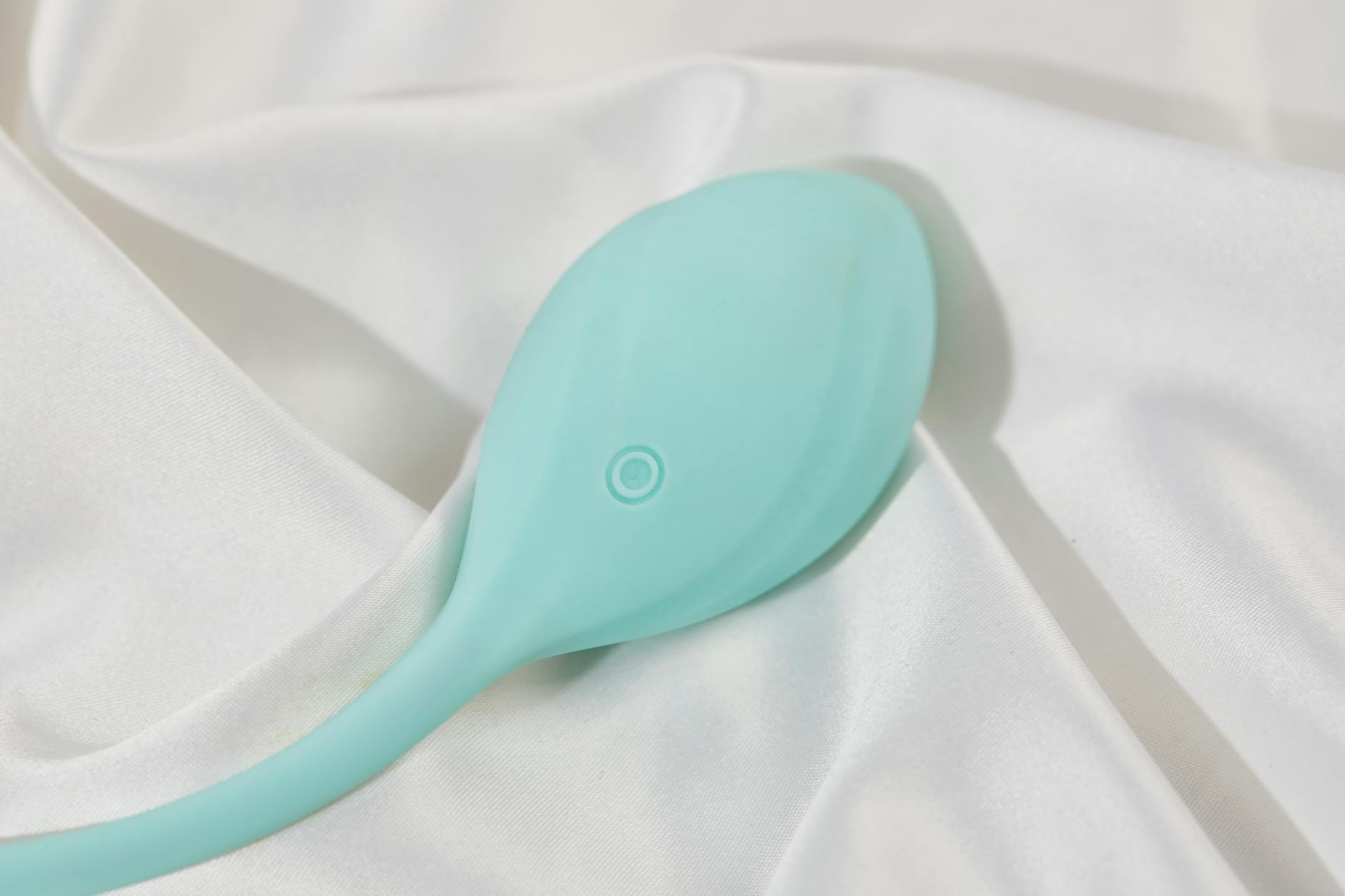
Let's talk about the nerves
You're thinking about trying a lemon vibrator for the first time and something feels off about it. Maybe it's the unfamiliar buzz. Maybe it's wondering if you're doing it "right." Maybe it's just the weight of it being such a deliberate choice when pleasure usually feels more accidental. Those feelings are completely legitimate, and honestly, they're more common than you'd think.
Here's what I know from working with people navigating this exact moment: the nervousness isn't a sign you shouldn't try it. It's just information about where you're starting from. And the good news is that lemon vibrators, particularly the clever suction-based designs Hello Nancy makes, are actually one of the gentler entry points into vibrator territory.
Why lemon vibrators feel different
If you've been imagining something that feels invasive or overstimulating, let me clear that up right away. A lemon clitoral vibrator like the Lem works through gentle suction and pulsing patterns rather than intense vibration. It's less about aggressive buzz and more about rhythmic stimulation that mimics what your hand might do, but with consistency and intensity you can control completely.
This matters because a lot of first-time nervousness comes from assuming vibrators work one way: you turn them on and hold on. That's not really how it works, and it's definitely not how modern clitoral vibrators work.
The sensation is more like a gentle pulling and releasing against your clitoris, rather than buzzing or intense vibration. For someone new to vibrators, this often feels less overwhelming than expected and more intuitive than feared.
The physical stuff that makes people anxious
Let me name the worries I hear most often, because naming them helps.
"Will it hurt?" Nope. Your clitoris has around 8,000 nerve endings and is designed for sensation. A well-designed vibrator adds stimulation, not damage. Start at the lowest setting (patterns 1-3 on the Lem) and you'll feel pleasant sensation, not pain.
"Will I lose feeling down there?" This is a real question and it deserves a real answer. Using a lemon vibrator occasionally won't cause numbness. If you're using it for hours daily at maximum intensity, that's different, but normal use builds sensitivity over time rather than depleting it. As with any pleasure tool, moderation and listening to your body matter.
"What if nothing happens?" Totally possible on a first try. Arousal is complicated. Your brain, your body, and your environment all need to be somewhat aligned. A vibrator isn't magic. It's a tool that works best when you're already somewhat interested, you're not stressed, and you're in a space where you feel safe exploring.
"What if I come too fast?" or "What if I don't come at all?" Both outcomes are fine. Orgasm isn't the goal here; exploration is. Some people come quickly with vibration and find it surprising. Others find it takes longer than they expected. Both are normal. If you come, great. If you don't, you've still learned something about how your body responds, and that information matters more than the outcome.
Setting yourself up for the least stressful first try
Three practical things make an enormous difference.
Choose your moment carefully. Not when you're rushing out the door. Not when you're anxious about something else. Not when your partner might interrupt. Pick a time when you have at least 30 minutes, you're not stressed, and you genuinely want to explore. This isn't an obligation. If the moment doesn't feel right, wait.
Read the instructions, actually. I know this sounds obvious, but understanding how the buttons work and what the different patterns feel like takes the "what if I mess up" anxiety out of the equation. You can't mess up a vibrator. Press a button and see what happens.
Start with lube and low settings. Even if you don't think you need lube, use it anyway. Water-based is ideal for silicone toys. This removes friction surprise and makes the sensation smoother. Start at pattern 1 on the Lem and stay there for a few minutes. You can always go higher; you can't unknow what a higher intensity feels like.
What actually happens when you turn it on
You'll feel the motor kick in. It's quieter than you'd think. Then you'll feel the suction build, which is the whole point. The sensation is gentle at first, then rhythmic. Some people describe it as a pulse. Others say it feels like someone is gently drawing your clitoris in and out. Both descriptions are accurate.
Your body might do things you didn't expect. Your hips might move slightly. Your breathing might shift. You might feel waves of sensation that build and then settle. You might feel absolutely nothing exciting the first time and something completely different the second time. All of that is normal.
The mental part matters as much as the physical
Here's what I see most often with clients exploring vibration for the first time: the anticipation is bigger than the reality. You build it up in your head as this intense, life-changing thing, and then it's just a pleasant sensation. That's actually ideal. You can relax into it, experiment with different patterns, and figure out what actually feels good rather than bracing for something extreme.
If you're feeling guilty about using a vibrator, that's worth examining. Your pleasure is not selfish. Exploring your own body is not shameful. If you're partnered, using a vibrator alone isn't a reflection on your partner or your relationship. Many people find that understanding their own pleasure deeply actually improves partnered sex, because you know what you like and can communicate it.
If it doesn't feel good, that's information too
Not every toy works for every body, and not every first experience is the moment it clicks. If you try a lemon vibrator and it doesn't feel right, that tells you something useful. Maybe the intensity needs adjusting. Maybe you need more arousal going in. Maybe this tool just isn't for you, and that's fine.
The goal isn't to love vibrators. The goal is to know yourself better. If the Lem doesn't work, try exploring at a slower pace without a toy. Read about how other people experience clitoral pleasure. Get curious instead of pressured.
Common questions about first-time vibrator use
Can I use a lemon vibrator if I've never had an orgasm before?
Absolutely. Some people find that a vibrator helps them experience an orgasm for the first time because it provides consistent, focused stimulation. Others find that it takes all the pressure off and they can relax into sensation instead of performing. If you've never had an orgasm, a vibrator can be a useful tool, but it's not required. Pleasure is the goal, not climax.
How long should my first session last?
There's no rule. Fifteen minutes is plenty. You could explore for 45 minutes. You could use it for five minutes and decide it's not for you. The point is you're listening to your body and doing what feels right in the moment, not checking off time.
Should I use a lemon vibrator alone or with a partner?
Your choice entirely. Many people prefer exploring alone first because there's less performance pressure and you can figure out what you like without anyone watching. Others feel more comfortable with a partner nearby. Some people never use a vibrator alone and only explore with a partner. None of these approaches is wrong.
What if I feel awkward about actually buying a lemon vibrator?
Honestly? Ordering online anonymously is the move. Hello Nancy ships discreetly in unmarked packaging. No one at your door knows what's inside. No judgment, no questions. If buying still feels vulnerable, give it time. There's no deadline for this exploration.
Will using a vibrator change what sex with a partner feels like?
It might. Some people find that after exploring vibration alone, partnered sex feels different because they understand their own body better and can communicate what feels good. Others find it doesn't change anything. You might want to incorporate a vibrator into partnered sex, or you might keep it as your solo exploration tool. This is worth discussing with a partner if you have one.
How often is it safe to use a lemon vibrator?
Daily is fine if you want to. Weekly is fine. Once a month is fine. The risk of numbness comes from extended sessions at maximum intensity, not from frequency. Use it as often as feels good. Your body will tell you when you've had enough.
The bottom line
Your nervousness about trying a lemon vibrator for the first time makes sense. You're trying something new and unfamiliar, and your body is asking for reassurance. That's just good wisdom. Honor it by going slow, creating a comfortable environment, and approaching this as exploration rather than performance.
A vibrator isn't a promise of instant pleasure or earth-shattering orgasms. It's a tool. Some tools feel immediately useful. Others take time to figure out. Some tools you try and decide aren't for you. That's all completely normal.
The real value isn't in the vibrator itself. It's in taking time to explore your own pleasure intentionally, learning what your body responds to, and giving yourself permission to prioritize sensation. That's valuable whether you use a vibrator or not.
If you're ready to try, approach it with curiosity instead of pressure. You're not testing yourself. You're just learning. And that's enough.