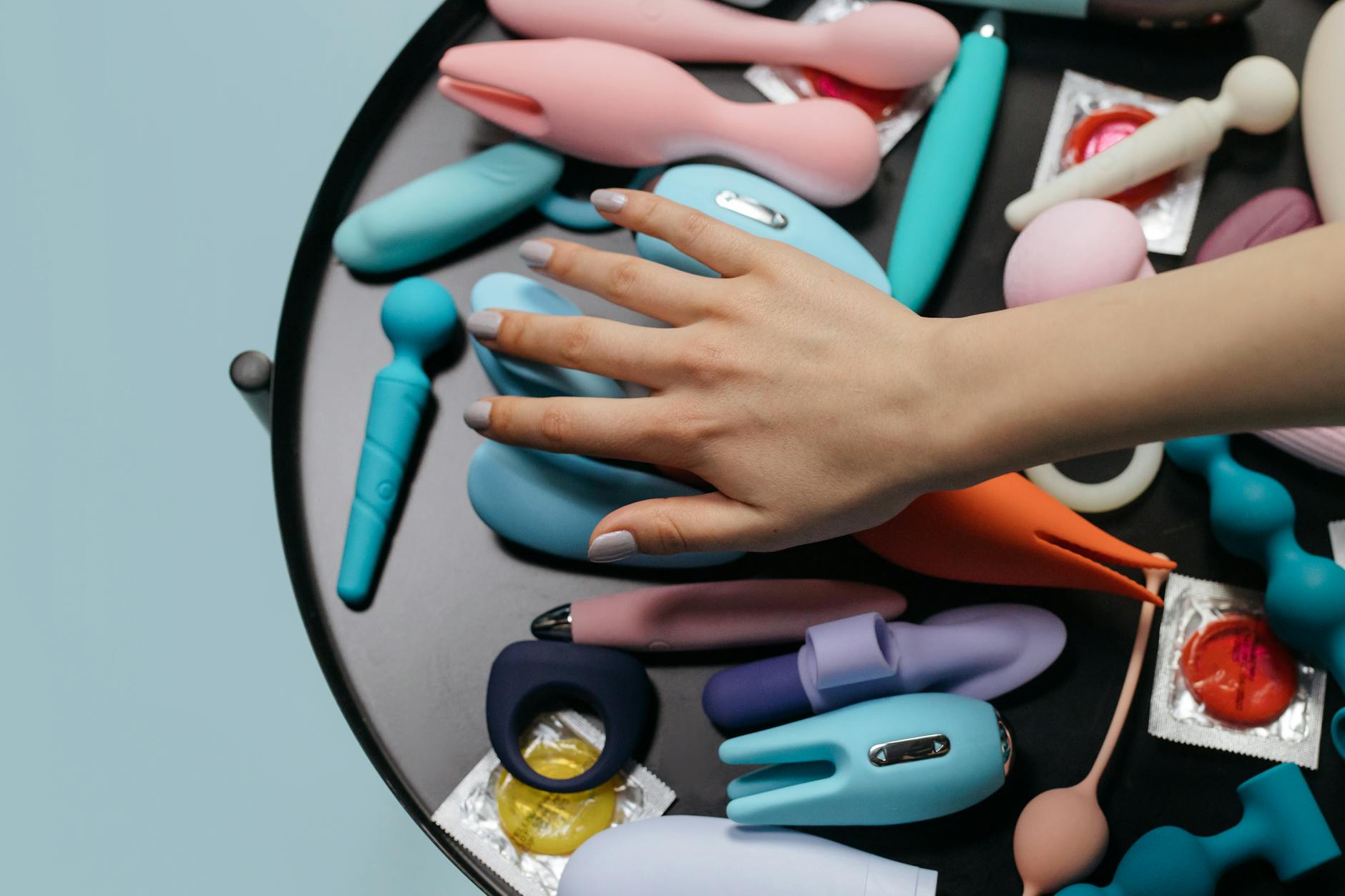
Let's talk about what "sensitive" actually means
Here's the thing: when someone says their vulva is sensitive, they usually mean one of three things. Either standard vibration feels uncomfortably intense and almost numbing. Or direct pressure on the clitoris causes discomfort. Or stimulation that works for partners or friends just doesn't register for them. All three are real, all three are incredibly common, and all three respond differently to different tools.
Most people with a sensitive vulva have been told to just tough it out or use a lower vibration setting. But the issue isn't always intensity. It's often the type of stimulation itself.
How traditional vibration actually feels
When a standard vibrator oscillates, it moves back and forth across tissue at a set rhythm, usually between 40 and 100 times per second depending on the device. This feels like a buzzing or humming sensation. The stimulation is dispersed across a broader area of nerve endings at once.
For some people, this is perfect. For others, it's too much at once. The sensation can feel overwhelming, create numbness over time, or just miss the mark entirely.
There's another issue most guides skip: conventional vibration can actually desensitize you. The repetitive stimulation at high frequency can overload your nerve endings temporarily, which is why you sometimes feel less sensation as a session goes on.
What lemon clitoral vibrators do differently
A lemon vibrator like the Lem uses suction and gentle pulsing rather than traditional vibration. Instead of buzzing back and forth, it creates a rhythmic pressure wave that draws skin and tissue gently into the device, then releases.
Think of the difference between someone tapping your shoulder repeatedly and someone gently pressing and releasing their hand. Same contact point, completely different sensation.
This suction-based approach has two major advantages for sensitive vulvas.
First, it concentrates stimulation more precisely. The suction focuses pressure directly on the clitoral complex without spreading stimulation across a wider area. For people whose sensitivity is tied to overstimulation, this narrower focus actually feels less overwhelming, not more.
Second, the rhythm feels more natural. Suction pulses mimic the way the clitoris responds during arousal in the first place. Your body recognizes this pattern, which means your nervous system doesn't have to work as hard to process it.
Why sensitive vulvas respond to pulsing, not buzzing
Your clitoris has around 8,000 nerve endings concentrated in a tiny space. That density is why even light touch can feel intense. But those nerves don't all fire at the same frequency.
Research on how the body responds to different types of stimulation shows that slower, rhythmic pulsing (typically 40-50 pulses per second) activates pleasure pathways more efficiently than higher-frequency buzzing. For a sensitive vulva, this difference is enormous.
When you use a traditional vibrator on a sensitive vulva, those 8,000 nerve endings get hit with sustained high-frequency input. The brain has to filter out noise from actual signal. You end up feeling less pleasure, or worse, discomfort.
With a lemon sucker, the pulsing rhythm is slower and more deliberate. Your nervous system can process each wave of sensation individually instead of merging everything into background noise.
The difference between intensity and sensitivity
This is crucial and almost nobody talks about it clearly. Intensity and sensitivity are not the same thing.
Intensity is how strong the stimulation is. Sensitivity is how easily your nervous system picks it up. You can have high sensitivity and low intensity (gentle suction feels like a lot), or low sensitivity and high intensity (buzzing vibration at max speed barely registers).
Lemon vibrators deliver moderate intensity but high sensitivity because the pulses are distinct and spaced out enough for your nervous system to process each one. A conventional vibrator might deliver lower objective intensity but feel overwhelming because the rapid oscillation creates sensory overload.
This is why some people say "I can feel a lemon vibrator more easily than a vibrator ten times more powerful." They're not exaggerating. They're describing a real neurological difference.
Why numb spots don't happen as easily with suction
That weird phenomenon where your clitoris stops responding mid-session? That's typically desensitization from sustained high-frequency vibration.
When you stimulate any nerve ending repeatedly at the same frequency for too long, it stops firing as reliably. It's a protective mechanism. Your nervous system basically says "I've got the message, I'm tuning this out now" to preserve its ability to detect other signals.
With suction-based stimulation, the pulsing rhythm gives your nerve endings a chance to "reset" between pulses. The on-and-off cycle means you're not creating the same prolonged overstimulation that leads to numbness.
People who use lemon clitoral vibrators often report that they can keep going longer without hitting that dead zone where sensation drops off. It's not magic. It's just giving your nervous system a breather between pulses.
When to reach for suction instead of traditional vibration
You're a good candidate for a lemon vibrator if you notice that standard vibrators either feel too intense, create numbness, or just don't seem to hit the right spot no matter the settings.
You should definitely try suction-based stimulation if you've been diagnosed with vulvodynia or if you experience pain with most types of direct vibration. The gentler, more focused approach often works where traditional toys don't.
You might also benefit if you're on medication that affects sensation. Things like antidepressants, antihistamines, or blood pressure meds can change how your nerve endings respond. A lemon vibrator's distinct pulsing pattern often cuts through that kind of medication-related dulling more effectively than conventional vibration.
How to actually use one if your vulva is sensitive
Start with the lowest setting. I know that sounds obvious, but most people skip this step and wonder why they're overwhelmed. On a lemon vibrator, pattern 1 is genuinely mild and very pulsed out.
Don't go directly to the clitoral head. Apply it to the hood or the side of the clitoris first. Let your body acclimate to the sensation before you move to direct contact.
Give yourself at least 10-15 minutes before you decide whether it's working for you. Sensitivity often means your body takes longer to warm up, and you need time for arousal to build naturally.
If even pattern 1 feels too much, you're not broken and the device isn't wrong for you. You might just need more warm-up time, or lubrication to reduce friction and help the suction seal properly. Water-based lube makes a tangible difference in how a lemon vibrator feels.
The right tool doesn't make sensitivity go away. It makes pleasure possible again.
The mental piece that nobody mentions
Here's something I see constantly in my practice: people with sensitive vulvas often have anxiety around sensation itself. You've tried things that didn't work. You've felt broken. You've maybe faked it a few times because you got tired of the awkwardness.
Then you use a lemon sucker and it actually works, and suddenly you're not just experiencing more pleasure. You're rebuilding trust in your own body.
That psychological shift matters more than the device itself. When your body responds to something after a long time of not responding, your brain relaxes. You stop bracing for disappointment. You actually get to enjoy sex instead of managing it.
If you've been using traditional vibrators and they've never quite worked, please try something different before you assume your sensitivity is a problem. Sometimes it's not about what's wrong with your body. It's about finding the right tool.
FAQ: Lemon Vibrators for Sensitive Vulvas
Will a lemon vibrator feel less intense than my current vibrator?
Likely yes, even on higher patterns. Suction-based stimulation concentrates pressure differently than oscillating vibration, which means it typically feels more focused but less overwhelming. Many people with sensitive vulvas actually reach orgasm faster with suction because their nervous system isn't fighting sensory overload.
Can I use lube with a lemon clitoral vibrator?
Yes. Water-based lube is fine and often helpful. It reduces friction and helps the suction seal work better. Silicone-based lube can damage silicone toys, so stick with water-based.
How is a lemon sucker different from a vibrator on a low setting?
The difference is in the pattern itself, not just the power level. A low vibration setting is still oscillating back and forth dozens of times per second. A lemon vibrator's pulsing is slower and more rhythmic. It's a fundamentally different type of stimulation, not just a dimmer version of the same thing.
Will my sensitivity go away if I use a lemon vibrator regularly?
Not in a bad way. Your body may become more responsive over time as you relax around sensation. This isn't desensitization. It's the opposite. You're teaching your nervous system that pleasure is safe, which actually increases sensitivity over time.
What if the lowest pattern on a lemon vibrator still feels too intense?
You might need more warm-up time before direct clitoral contact, or you could apply it to the side or hood rather than directly on the clitoral head. You could also use the device briefly on pattern 1 and then stop, building your tolerance gradually. If even light suction causes pain, mention it to your doctor.
Are lemon vibrators actually better for everyone with a sensitive vulva?
Most people with true sensitivity respond better to suction than to traditional vibration, but not all. Some vulvas just prefer broad, gentle oscillation. The only way to know is to try one. If a lemon vibrator doesn't work after a fair trial with proper warm-up and lube, it's not the device for you, and that's completely fine.
The bottom line
Sensitivity isn't a flaw. It's information about how your nervous system is wired. The problem isn't your body. It's usually that conventional tools aren't speaking the language your body actually understands.
When you find a tool that does speak that language, pleasure stops being something you work toward and starts being something you actually feel. That's the entire point.
If you've struggled with traditional vibrators and you're curious about trying something different, a lemon vibrator is worth the experiment. Your pleasure matters, and you deserve a tool that matches your body's actual needs.