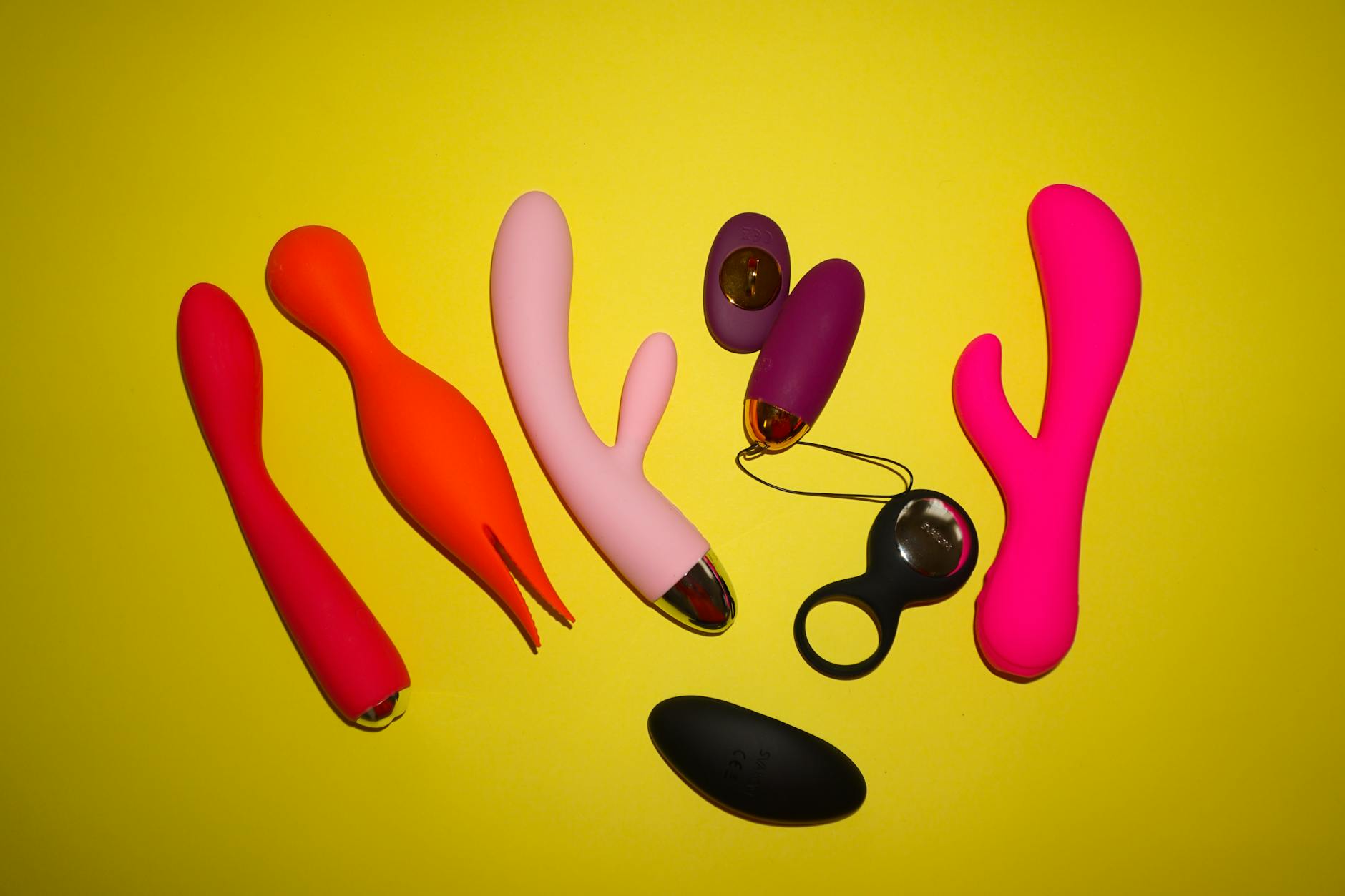
Here's the thing nobody tells you about self-consciousness and pleasure
Shame isn't biological. It's learned. And that means it can be unlearned.
I spend a lot of time in sessions listening to people describe the moment pleasure stops feeling safe. It's rarely a single trauma. Usually it's a thousand small messages: the way your parent reacted when you touched yourself at seven, the sex education class where girls were taught to be "clean" and boys were taught to be "conquerers," the jokes about women who wanted "too much," the partners who made you feel needy or broken when your body didn't respond on their timeline. By the time you're an adult, those messages live in your nervous system. Your brain has learned to interpret pleasure as something vaguely shameful, or at minimum, something you don't quite deserve.
That's not you being broken. That's you being normal.
Why self-consciousness kills arousal (it's not psychological weakness)
When you're self-conscious, your sympathetic nervous system activates. This is the fight-or-flight response. Blood flows away from your genitals and toward your large muscle groups, your breathing gets shallow, and your body basically says: we're in danger. Which you're not. But your nervous system doesn't know the difference between real threat and shame.
This is why telling someone "just relax" about pleasure is useless. Relaxation isn't a choice you can make in the moment. It's a physiological state you have to build through practice and permission.
Lemon vibrators work differently here than traditional vibrators because they operate on a different principle. Instead of moving back and forth, they use air-pulse suction technology. That change in stimulation pattern can interrupt the shame spiral because it feels novel enough to redirect attention from "am I doing this right" to "oh, that actually feels incredible." Your brain's self-monitoring system momentarily goes offline.
The permission-building work happens before you touch yourself
I'm going to be direct: using a clitoral vibrator won't fix deep shame on its own. But it can be one part of a larger retraining of your nervous system.
Start here. Sit with this question for five minutes without trying to answer it: where did I learn that my pleasure wasn't safe or acceptable? You might trace it to a specific person or moment. You might just feel it as a vague fog. Both are real data.
Once you have some sense of the origin, the next step is separating past from present. That rule or that person's judgment had power in a context that no longer exists. You're an adult now. You get to decide what happens in your own space.
Write this down if it helps: "I deserve to explore my own pleasure. This is not selfish. This is not gross. This is not unsafe. This is mine."
I know that sounds like self-help language. But shame thrives in silence, and it withers when you name it directly.
How to actually start using lemon vibrators when you feel shame
Three foundational moves.
1. Lower the stakes. Don't start by trying to reach orgasm. That turns it into performance, which is exactly what triggered the shame in the first place. Instead, set a timer for five minutes and use it just to explore what different sensations feel like. No goal. No outcome. Just sensation.
Lemon vibrators are good for this because you can start on the lowest settings (patterns 1 and 2) and they're less intimidating than wand vibrators visually. Something about their shape makes them feel less "toy" and more "tool." That psychological distance helps when you're rebuilding trust with your own body.
2. Create actual physical privacy. Not just "no one is home." Lock the door. Put your phone in another room. Tell yourself out loud: "For the next 20 minutes, I am prioritizing myself." This sounds basic, but women especially are trained to be responsive to external demands at the expense of internal ones. Creating real boundaries signals to your nervous system that this time is non-negotiable.
3. Name what you're doing. This matters more than people realize. Instead of "touching myself" (which carries shame), try "exploring my own body" or "giving myself pleasure." Language shapes how your nervous system interprets an action. The same physical act feels different depending on how you frame it.
What to do when shame shows up mid-session
It will. That's not failure. That's your nervous system doing exactly what it was trained to do.
When shame spikes, pause. Notice it without judgment. Don't try to push through. Ask yourself: whose voice is this? Where did I learn this rule? Then decide if that voice gets to be in this moment with you. (Spoiler: it doesn't.)
Take a breath. Lower the intensity of the lemon vibrator. Go back to gentle exploration. Your job isn't to prove you're not ashamed. Your job is to gradually teach your body that pleasure is safe.
This takes time. For some people, a few weeks. For others, months or years of unlearning. That's not a failure mode. That's the actual work of healing.
Building evidence that pleasure is safe
Every time you use a lemon vibrator and nothing bad happens, your nervous system absorbs that data. You're literally rewiring your brain's threat assessment.
Start small and simple. A five-minute session where you felt even a little bit of pleasure is a data point. Your brain notes it. "Okay, we tried that and we survived. In fact, we felt good."
Repeat that enough times, and the shame starts to lose its grip. Not because you're forcing positivity. But because your body has evidence.
When to involve a partner (or not)
If you're in a relationship, your partner's response to your pleasure shapes how safe it feels. If they've made comments about toys being weird or unnecessary, or if they've made your pleasure feel like an obligation rather than a gift, that's a separate conversation you need to have. Using a lemon vibrator isn't about replacing partnership. It's about reclaiming your own authority over your body.
Some people find that solo exploration actually strengthens partnered sex because they're coming to the encounter less desperate, less shame-filled, more grounded in their own capacity for pleasure. That's powerful.
If you have a supportive partner, you might eventually explore together. But start alone. Build that permission structure by yourself first.
The role of body knowledge
Here's something that gets skipped in most sex education: you can't effectively communicate about pleasure if you don't know what you actually like. Lemon vibrators and other clitoral vibrators are investigation tools. They help you answer the question: what does this body of mine actually respond to?
That's not selfish. That's the foundation of everything.
FAQ: Self-Consciousness and Pleasure
Why do I feel shame about pleasure even though I know logically it's healthy?
Because shame isn't logical. It lives in your nervous system, not your rational mind. You can intellectually know that pleasure is good and still feel visceral discomfort. That's not a contradiction. That's how trauma and learned responses work. They operate beneath conscious thought. The fix isn't more logic. It's nervous system retraining, which is what happens when you practice exploring your pleasure in a safe way, repeatedly, over time.
Does using a lemon vibrator make the shame worse or better?
Neither, initially. A vibrator is a neutral tool. But if you use it intentionally as part of rebuilding permission, it becomes an asset. The novelty of air-pulse suction can actually help interrupt the shame spiral because your brain's self-monitoring system gets distracted by the new sensation. That doesn't mean the vibrator fixes shame on its own. It means it can be one useful component of the work.
How long does it take for shame to go away?
There's no timeline. For some people, consistent practice over two to three months creates real shifts. For others, it's a longer conversation. What matters is that every time you explore your pleasure and nothing bad happens, your nervous system gets a little bit of new data. Over time, that adds up. You're not trying to eliminate shame overnight. You're gradually tipping the scales toward permission.
Should I tell my partner I'm using a lemon vibrator if I feel shame about pleasure?
That depends on your relationship and your comfort level. You don't owe your partner access to your solo pleasure practices if you don't want to share them. That said, shame often lives in silence. If your partner has made you feel judged about pleasure, that's a relationship issue worth addressing, either between the two of you or with a therapist. If you have a supportive partner and you want to share, doing so can actually deepen connection because you're being vulnerable and authentic.
Can shame about pleasure affect partnered sex even if I like my partner?
Absolutely. If your nervous system has learned that pleasure is unsafe or selfish, it will send that message regardless of how much you like or trust your partner. That's why solo exploration matters. You're teaching your body that pleasure is inherently safe, not just situationally okay. Once you've built that foundation, partnered sex often improves because you're less focused on whether you "should" be enjoying it and more focused on actually enjoying it.
Is it better to start with a lemon vibrator or a different type of toy if I'm dealing with shame?
Lemon vibrators and other clitoral vibrators with air-pulse technology can be good starting points because they feel less "intimidating" visually and the sensation is different enough to redirect anxious self-monitoring. But what matters most is that you choose something you feel comfortable exploring. If a lemon vibrator feels too direct emotionally, that's okay. You might start with external exploration. There's no wrong door, as long as you're moving toward permission.
The path forward is about practice, not perfection
Shame doesn't dissolve in a single session. It dissolves through consistent practice and evidence. Every time you give yourself permission to explore pleasure, you're voting against the old stories. You're saying: my pleasure matters. My body deserves attention. I'm not broken.
Lemon vibrators are tools that can support that retraining. But the real work is the internal permission you're building.
If you find yourself stuck in shame that doesn't shift with solo practice, consider working with a therapist who specializes in somatic work or sex-positive therapy. Sometimes what lives in the nervous system needs professional support to unwind. That's not weakness. That's wisdom.
Your pleasure is worth the investment. You're worth the investment.
If you're ready to start exploring, check out our guide to finding the right settings for your needs. And if you're working through deeper relationship dynamics around pleasure, our article on rebuilding intimacy after relationship gaps might offer some useful context. For questions about anything else, reach out to contact us.