How chronic stress actually kills arousal
Let's be real: when you're stressed, your body isn't thinking about pleasure. It's thinking about survival.
Prolonged stress (financial pressure, family caregiving, job instability, relationship conflict) floods your system with cortisol. That stress hormone does something useful in the short term. It sharpens focus and triggers the fight-flight-freeze response. But chronic stress? It tells your nervous system that now is not the time for reproduction, connection, or anything that isn't essential.
Your brain literally deprioritizes arousal. The neural pathways that light up during pleasure get quieter. Blood flow to the genitals decreases. Desire flattens. You're not broken. Your body is doing exactly what millions of years of evolution programmed it to do. The problem is, most of us don't live in environments where constant threat has ended. The stress lingers.
Why restarting arousal is harder than you think
Here's where most people get stuck: they think that once the stress is "handled," arousal comes roaring back. It usually doesn't work that way.
After months or years of low desire, your nervous system has become accustomed to a baseline of low stimulation. It's like a muscle that hasn't been used. Your clitoral nerve endings are still there, your capacity for orgasm is still there, but the signal between your brain and body has gone quiet. That neural pathway needs to be reactivated, deliberately and consistently.
And there's a catch: trying to force arousal through willpower or guilt ("I should want this") actually reinforces the stress. You need a strategy that reconnects pleasure to your body without pressure.
The nervous system restart: what it actually involves
Recovering arousal isn't about jump-starting back into partnered sex. It's about teaching your nervous system that pleasure is safe again.
This typically happens in three overlapping phases. First comes awareness: noticing where you feel sensation in your body and what textures or rhythms create even the smallest spark of interest. Second is permission: deliberately setting aside judgment about how "normal" your response is. Your arousal coming back at its own pace isn't a failure. Third is consistency: gentle, frequent touch that conditions your nervous system to expect and anticipate pleasure.
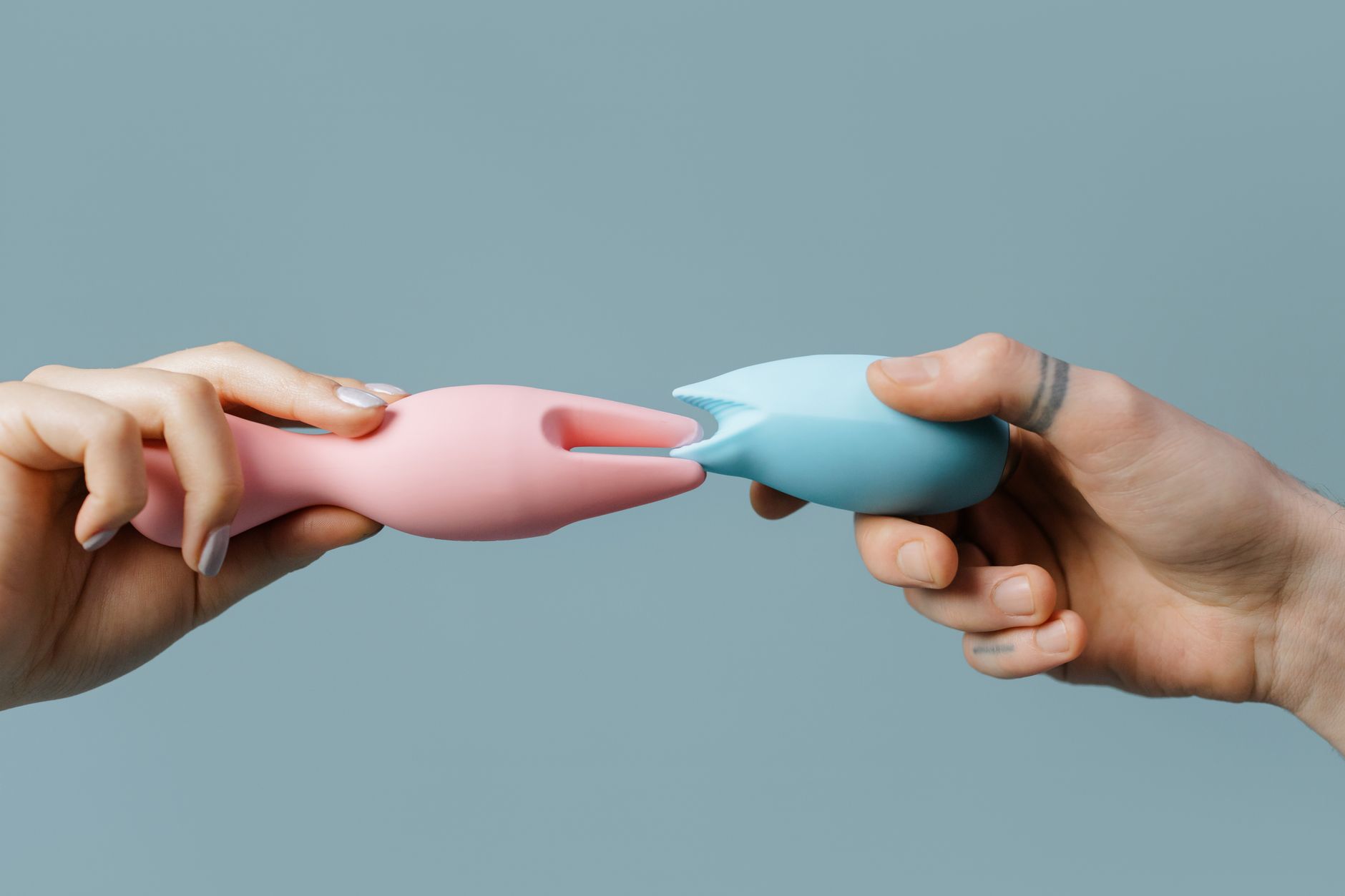
Lemon vibrators fit specifically into phase two and three. They're designed around suction stimulation, which creates a broader, more diffuse sensation than traditional vibration. For bodies coming out of arousal hibernation, that matters. The sensation feels less intense and more approachable than direct clitoral pressure. You're not forcing a response. You're inviting one.
Starting your rebuild: the first few weeks
If you're six months or longer into a stress-induced arousal gap, treat the first two weeks like an introduction, not a performance.
Set a realistic schedule: once or twice a week, 10-15 minutes solo. No partner, no performance expectation, no goal of orgasm. The goal is sensation. Use water-based lubricant even if you don't think you need it. Stress suppresses natural lubrication, and lubrication itself signals to your brain that your body is permitting pleasure. Start on the lowest suction setting on your Lemon clitoral vibrator. Explore what feels neutral, what feels warm, what feels genuinely good. Journaling one sentence afterward ("I felt warmth on my left side" or "This felt kind of nice") creates a tiny record of reconnection that your brain can reference.
Don't rush to orgasm. If it happens, fine. If it doesn't, that's the point. You're teaching your nervous system that touch is safe and available without needing a payoff.
Weeks three through eight: building consistency and intensity
Once you've had a few sessions where touch feels neutral or pleasant (not painful, not absent), you can shift slightly.
Increase frequency to 2-3 times per week. Extend sessions to 15-20 minutes. Move through the suction patterns on your lemon vibrator, spending time on each. Notice which ones make you pause or lean in slightly. That's the signal you're looking for. It doesn't have to be fireworks. A gentle "yes, that's the one" is progress.
Around week five or six, many people notice a shift: anticipation. You might think about your solo time during the day. You might find yourself wanting to extend a session. That's your nervous system recognizing safety and beginning to expect pleasure. Don't push harder. That impulse to go faster or more intense often sabotages recovery. Stay with what's working.
If numbness is part of your experience (and it often is with stress-related arousal loss), moving slower through sensations actually helps. Your nervous system learns the pathway more deeply. You're building a stronger signal, not a faster one.
Bringing a partner back in: the conversation that matters
If you're in a relationship, this is where the second conversation starts.
Most partners assume that stress-related arousal loss is about them (they did something wrong, they're not attractive enough anymore, they're bad at sex). None of those things are usually true. But untangling that narrative takes explicit discussion. Before you resume partnered activity, sit down and actually say: "My arousal shutdown was about my nervous system being in protection mode, not about you or us." Then explain what you're doing to rebuild it. Invite them into the timeline, not the mechanics. "I'm going to spend the next month reconnecting with my own body. Then we'll start rebuilding together." Most partners find it profoundly relieving to understand that they're not the problem.
When you do resume partnered activity, the same principle applies: longer foreplay, gentler touch, explicit focus on sensation before performance. If you've been using lemon vibrators solo, bringing one into partnered activity can ease the transition. It removes performance pressure (neither of you is "responsible" for your arousal; the tool is). It also normalizes the fact that your pleasure might need different touch than it did before stress hit.
Common setbacks and how to move through them
Most people rebuilding arousal hit at least one frustrating week where sensation flattens again. This is normal. It usually means your nervous system has hit a small activation ceiling and needs rest to integrate the change. Back off intensity slightly for a week. Go back to lower suction settings. Often, the plateau breaks on its own.
Another common setback: guilt or shame about "needing" a tool or "needing" longer foreplay. Your body isn't broken. It's recovering. Every adaptation you're making (using lubricant, starting on lower settings, taking longer) is intelligent self-care, not failure.
If after three months of consistent practice you're still not experiencing any arousal, that's a signal to check in with a therapist or doctor. Sometimes stress-related arousal loss is compounded by other factors: untreated anxiety, hormonal shifts, or relationship issues that haven't been addressed. Professional support matters.
The long view: what changes when you rebuild
Once arousal does return (and it usually does, with patience), something often shifts beyond just "wanting sex again." Many of my clients describe feeling more grounded in their own bodies. They trust their nervous system's signals. They're more attuned to what brings them genuine pleasure versus what they think they "should" want.
That shift is the actual prize. The arousal is the proof that your nervous system is healing. But the deeper recovery is in knowing your own body again.
FAQ: Rebuilding Arousal After Long-Term Stress
How long does it usually take to rebuild arousal after chronic stress?
It depends on how long the stress lasted and how much of your baseline arousal was affected. Most people see noticeable shifts within 4-8 weeks of consistent, pressure-free touch. Deeper integration (feeling spontaneous desire again) often takes 3-6 months. The timeline matters less than consistency. Once a week for three months beats sporadically for a year.
Can my partner help me rebuild arousal, or should I start solo?
Start solo. Partnered activity creates performance pressure, even when both people mean well. After you've spent 2-3 weeks reconnecting with your own body, you can invite your partner into the process. The key is framing it clearly: "I'm rebuilding my arousal response. This isn't about you. Here's what helps." Many couples find that this actually deepens connection because it removes shame and creates genuine curiosity about what the other person needs.
Is using lemon vibrators or other toys a sign my arousal is "broken"?
No. Lemon clitoral vibrators and other adult toys are tools for pleasure, not indicators of dysfunction. In fact, they're especially useful during arousal recovery because suction stimulation is gentler and more diffuse than direct pressure. You're not masking a problem. You're using a tool that's literally designed for this work. Your nervous system doesn't care about the tool. It cares about consistent, safe sensation.
What if stress is still ongoing? Can I rebuild arousal while dealing with it?
You can make progress, but slower. Your nervous system will keep getting mixed messages if the stress environment hasn't shifted. If possible, address the stressor (whether that's changing jobs, setting boundaries, getting therapy for anxiety, or ending an unhealthy relationship) while you're rebuilding arousal. If the stressor can't be removed, focus on nervous system regulation tools: therapy, movement, meditation. The pleasure work will feel less uphill when your brain isn't fighting survival mode.
How do I know if my arousal loss is stress-related versus medical?
Medical causes (hormonal shifts, medication side effects, thyroid issues, diabetes) usually come with other symptoms: fatigue, mood changes, weight shifts, or pain. Stress-related arousal loss typically involves desire dropping faster than physical sensation. You might lose interest in sex while your body still responds fine if you push through. If you're unsure, a doctor's screening rules out medical causes. From there, a therapist trained in nervous system work can help you assess whether stress is the primary driver.
Should I use penetrative toys while rebuilding, or just clitoral vibrators?
Start with clitoral stimulation. Penetration adds another layer of sensation and expectation. During early recovery, keeping it simple (focused, clitoral, solo) helps your nervous system learn the basic signal: "Touch is safe and available." Once arousal is returning consistently, you can explore other sensations if you want to.
What comes next
Recovering arousal after chronic stress is genuinely different from recovering from other pleasure gaps. You're not treating a physical issue. You're retraining your nervous system to recognize that safety and desire can coexist.
Lemon vibrators, specifically their suction design, fit into that recovery cleanly. They don't demand intensity. They build sensation gradually. They allow you to control exactly what pressure and rhythm you experience. That's not a workaround. That's precision.
If you want to dig deeper into how arousal recovery fits into relationship healing, I've written about how to reconnect with pleasure after relationship stress and how to use lemon vibrators when your attachment style affects intimacy. Both paths often run parallel.
Your arousal will come back. Trust the timeline. Trust your body. It's been protecting you. Now it's ready to remember pleasure.