
Let's be real about the nervousness
You're thinking about bringing a lemon vibrator into sex with your partner, and you're already rehearsing how to say it. You're wondering if they'll feel replaced, if they'll think you're not satisfied, if the whole thing will spiral into a conversation you didn't want to have. Here's what I know from decades of couples work: that nervousness is completely normal, and it's also completely fixable.
The fear isn't really about the toy. It's about what you think the toy means. And that's where we start.
What introducing a toy actually signals
When you bring a clitoral vibrator into partnered sex, you're not saying "I want to have sex alone." You're saying "I want us to explore this together." That's an invitation, not a rejection. But your partner might not automatically hear it that way, especially if they grew up thinking toys were a substitute for them rather than an addition to what you already have.
The research is clear on this: couples who use toys together report higher satisfaction with their sex lives and stronger emotional intimacy overall. Not because the toy is magic. Because the conversation that precedes it forces you both to get honest about what you actually want, what feels good, and what you're curious about. That honesty is the thing that matters.
So the real work isn't about the lemon vibrator itself. It's about the five minutes of awkward conversation that gets you both on the same page.
Timing and setting
This conversation does not happen in bed. It doesn't happen right before sex. It doesn't happen when you're already undressed or in the middle of vulnerability.
Pick a neutral moment. I recommend a walk, a car ride, or a casual evening at home when neither of you is tired or stressed. You want space to actually listen to each other without the pressure of immediate action. You want time to ask questions, to check in, to say "wait, what do you mean by that?"
The best opening: "I've been thinking about trying something new together, and I want to talk to you about it first." That's it. No preamble, no justification, no "I read this thing." Just a clear statement that you want to include them in the decision.
The actual words
Here's what works: "I'm interested in trying a clitoral vibrator with you. I think it could feel really good for me, and I like the idea of exploring it together instead of alone. What do you think?"
Notice what's missing. No "I'm not satisfied." No "you're not enough." No "I read that it would help." Those framings put your partner on the defensive immediately. You're instead offering a simple fact and an invitation.
Your partner might say yes right away. They might say no. They might ask questions. "Why do you want to do this?" "Does this mean something's wrong?" "Have you used one before?" All of those are fair. And most of them are really asking one thing underneath: "Do you still want me?"
That's the question you're answering. "Yes. I want us. And I think this could be fun for both of us."
What if they need convincing
Sometimes your partner will hesitate. They might worry about performance, about being replaced, or honestly just about the unfamiliarity. Here's what actually helps:
You can explain how lemon vibrators work differently than other toys. The suction and pulsing pattern of a clitoral vibrator like the Lem creates sensations that a partner's hand or mouth can't replicate, which means they're not in competition with anything you and your partner already do together. They're additive. Many couples find that using a toy actually creates more physical contact, not less, because you're both engaged with the sensation together.
You can also offer to research it together. Watch an educational video. Read reviews. Let them see that this isn't a weird secret. It's a normal thing that thousands of couples are doing, and it's designed specifically for the kind of pleasure that couples want to share.
And if they're still hesitant, you can simply say: "I'm bringing this up because I want to explore my pleasure with you, not without you. If you're not ready yet, that's okay. But I want you to know this is something I'd like to try."
Note what that does: it removes the pressure on them to perform excitement they don't feel, while also being clear that this matters to you. That's respect and honesty at the same time.
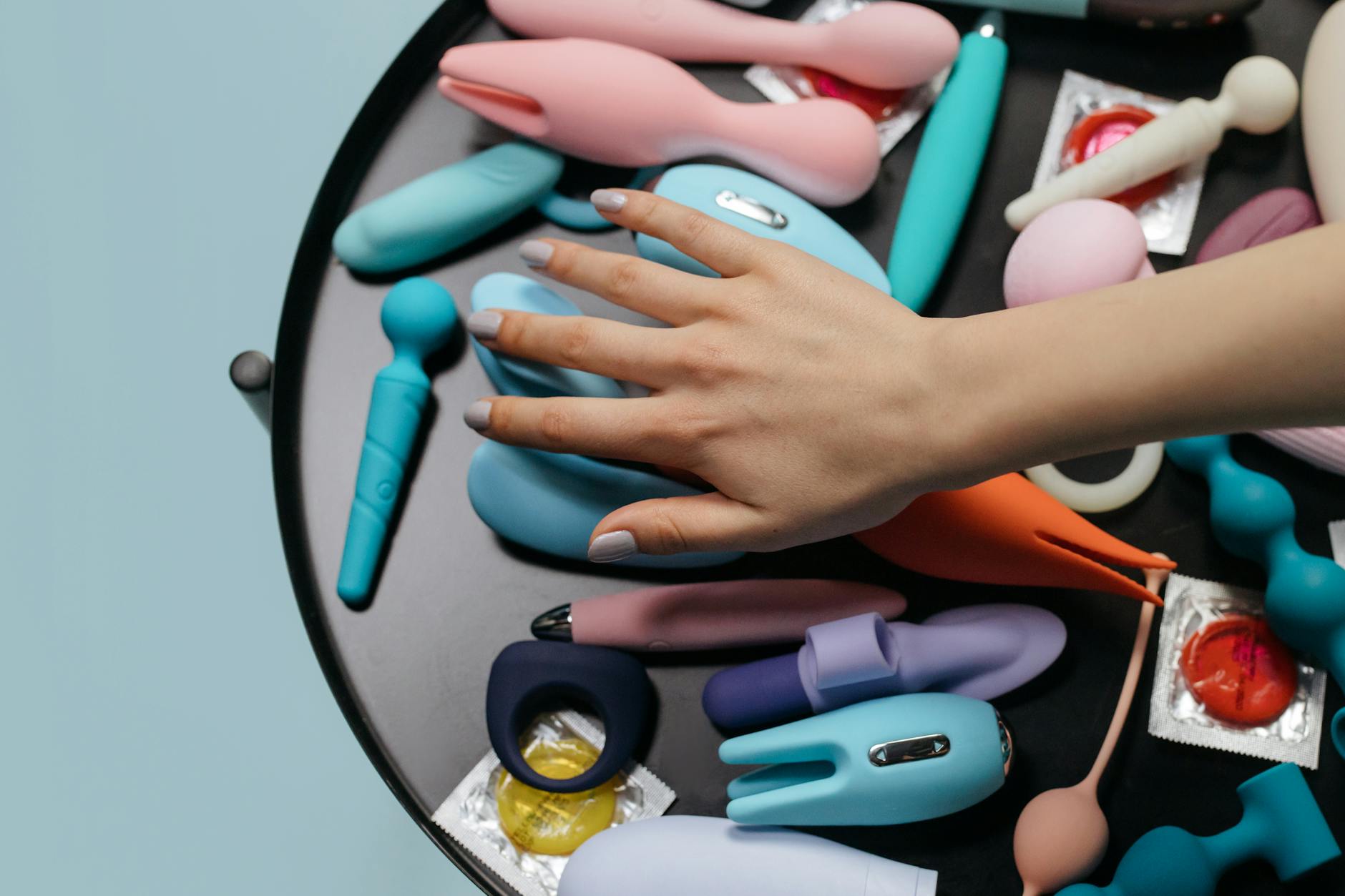
Photo by cottonbro studio on Pexels
The first time together
Once you've had the conversation and your partner is on board, you still want to keep the pressure low for the actual experience. Don't make it a production. Don't build it up as "the night we try the new thing." Instead, integrate it into normal sex the way you'd integrate anything else.
Start with clothing on or mostly on. Show your partner the toy, let them hold it, understand how it works. No one wants to be surprised by a vibration they weren't expecting. Familiarity removes fear.
When you do use it, you might start with your partner using it on you while you're both present and touching. Or you might use it yourself while they're inside you or close to you. The point is that you're exploring it together, not that you're using it in any particular way.
Pay attention to what your partner is experiencing emotionally. Are they curious? Are they withdrawn? Are they getting into it? Check in. "Does this feel good to you?" "Do you want to try something different?" "What are you thinking?"
That communication during the experience often matters more than the experience itself. It's proof that you're still connected, still interested in each other, still willing to be vulnerable together.
When things feel off
Sometimes the toy comes out and your partner goes quiet, or sex feels less connected afterward, or they seem resentful. Don't ignore it. Bring it up gently, away from the bedroom.
"I noticed you seemed off after we tried that. Talk to me." Let them actually answer. Maybe it triggered something about insecurity. Maybe they felt pressured. Maybe it just didn't feel good and they're embarrassed to say it. You won't know unless you ask.
The couple work I do suggests that the willingness to have these check-in conversations is actually what saves a sex life, not the toy. Because good sex lives are built on good communication, and good communication is built on curiosity about your partner rather than assumption.
If your partner needs to go slower, go slower. If they decide toys aren't their thing, that's information too. The goal was never specifically the lemon vibrator. The goal was intimacy, exploration, and pleasure. Those things can happen in lots of ways.
The deeper layer
I've noticed that couples who navigate this conversation well often find that the experience opens something else up. They get better at asking for what they want in other areas of life. They get less defensive about their partner's needs. They realize that intimacy isn't about performing the right way or being enough on your own. It's about showing up, being curious, and staying connected even when things feel unfamiliar.
That's why I encourage the conversation. Not because the toy is important. Because the honesty you have to practice in order to bring it into your shared life is important. And once you've done it once, everything else gets easier.
FAQ
How do I bring up toys if my partner has never mentioned them?
Your partner's silence doesn't mean disinterest. It often means they were waiting for you to go first, or they were worried about rejection. Bringing it up clearly and without shame gives them permission to be curious without having to initiate. That matters.
What if my partner thinks I want to use toys instead of having sex with them?
That's the fear talking, not reality. Directly address it: "I want us to explore this together. This doesn't replace sex with you. It adds to it." Offer concrete examples if needed: "I'm imagining using it while you're inside me" or "I'd like you to use it on me."
Can I use a lemon vibrator if I've never had one before?
Absolutely. In fact, clitoral vibrators work better for sensitive clits, which means most people find them accessible and pleasurable on the first try. Start on a lower intensity setting and explore from there.
Should I buy the toy before talking to my partner?
I'd suggest having the conversation first. Your partner will feel more included if they have a say in the choice, and you'll get to know their actual concerns before you've already committed. Once you've talked, you can browse options together or surprise them if they're into that.
What if my partner wants to use a toy during sex but I'm not sure I want that?
That's fair. Be honest. You can say "I want to think about this" or "I'm curious but I'm not ready yet." You don't have to do anything that doesn't feel right. The conversation goes both ways.
How do I know if we're using the toy right?
If it feels good and you're both enjoying it, you're doing it right. There's no correct angle, speed, or position. Pleasure is the only metric that matters.
The thing no one tells you
The conversation you're nervous about isn't actually about the toy. It's about trust, curiosity, and your willingness to be seen asking for what you want. Once you've done that, sex with your partner often becomes less performative and more real. And that's when it actually gets good. So take a breath, pick your moment, and say the thing. Your partner probably wants to hear it anyway.